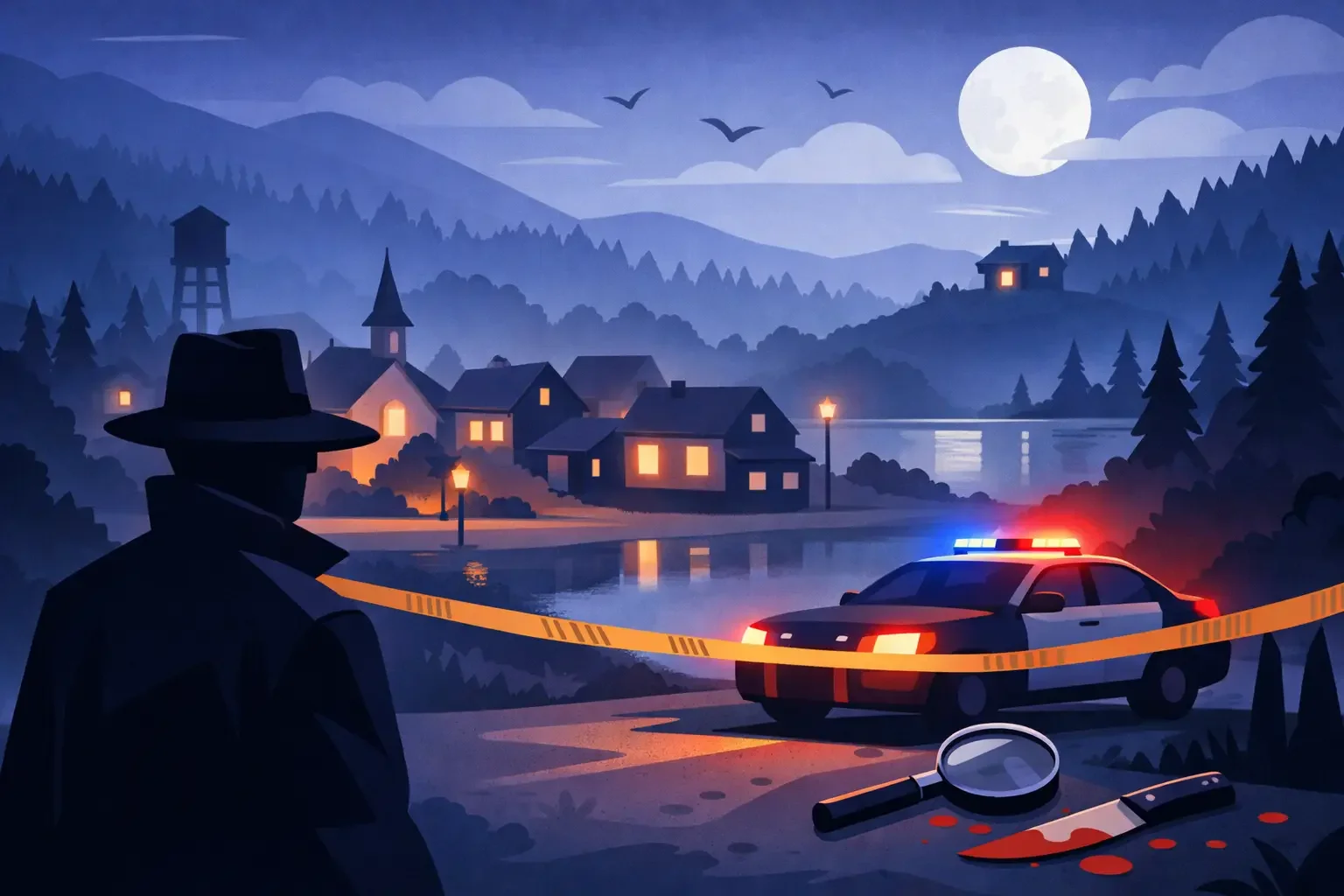
A sheriff who knows every face in town. A missing girl nobody wants to talk about. A diner where the coffee is hot, the gossip is hotter, and one lie can get you buried before sunrise. That’s the engine of a small town mystery thriller. It takes a place that looks safe, tightens the walls, and then lets the blood seep through the floorboards.
That setup keeps working because it weaponizes something readers already understand. Small towns sell comfort on the surface - familiar streets, family names, local rituals, old history. A thriller comes in and turns every one of those comforts into a threat. The sheriff might be compromised. The pastor might know more than he says. The family friend who brought casseroles after a funeral might have a reason to keep the victim quiet forever.
A lot of genres promise danger. This one promises danger with nowhere to hide. That difference matters.
What makes a small town mystery thriller so effective
In a city thriller, characters can disappear into the crowd. In a small town, everybody is the crowd. Your past is public property. Your bad night at the bar becomes breakfast conversation. If you start asking the wrong questions, people notice fast.
That pressure gives the genre its heat. Suspicion doesn’t spread in a straight line. It ricochets through churches, diners, football bleachers, town council meetings, and back porches. One rumor can wreck a marriage, shift an election, or send a killer into panic mode. The setting isn’t just scenery. It acts like a trap.
The best version of this story also understands that isolation is emotional, not just physical. Sure, the road out of town may be a long dark stretch lined with pines and bad decisions. But the real prison is social. If your father worked with the prime suspect, if your sister is dating the deputy, if your family already carries a stain from twenty years ago, you can’t investigate cleanly. Every answer costs something.
That’s why the reveals land harder. In a strong small town mystery thriller, the truth doesn’t just solve the case. It detonates the entire local myth. The town says it protects its own. The story proves exactly who gets protected and who gets sacrificed.
The secret weapon is familiarity
The genre runs on contrast. Readers walk into a town they recognize instantly - one main street, one high school, one sheriff’s department, one local legend everyone pretends is just history. Then the story starts stripping paint off the walls.
That familiarity makes the danger feel personal. A remote cabin is scary. A remote cabin owned by the nicest man in town is worse. A body in the woods is grim. A body found near the spot where the town hosts summer fireworks is better thriller fuel because it corrupts a place people were supposed to trust.
Familiarity also sharpens character conflict. In a small-town setup, the detective usually isn’t chasing strangers. They’re questioning old classmates, former lovers, drinking buddies, or people who attended their mother’s funeral. Every interview carries baggage. Every clue drags up history. That gives the story more bite than a procedural built on random suspects and clean professional distance.
There’s also a nasty little thrill in watching politeness cover violence. That’s catnip for suspense readers. The smile is too quick. The handshake lingers too long. The town fundraiser, parade, or church picnic becomes the perfect place for a threat delivered under breath. You don’t need a car chase every ten pages when the social tension is wired this tight. Still, when the action does hit, it hits harder because the fuse has been burning under all that fake normal.
Why readers keep coming back to this setup
A small town mystery thriller offers two pleasures at once. You get the puzzle - who did it, why, and how deep the cover-up goes. But you also get the creeping dread that the whole community is sick in ways nobody wants named out loud.
That blend matters for commercial fiction readers who want momentum, not homework. The mystery pulls you forward. The town itself keeps layering on menace. One chapter gives you a clue. The next gives you a family secret. Then comes the old fire, the corrupt land deal, the death ruled an accident, the witness who moved away and never came back. The story keeps feeding the machine.
And unlike some pure puzzle mysteries, this subgenre usually has teeth. The stakes aren’t abstract. If the protagonist gets it wrong, someone dies, disappears, or gets framed. If they get it right, they may still lose their job, their marriage, or whatever shred of belonging they had left. That emotional damage is part of the appeal. Readers want the case solved, but they also want the fallout.
There’s a reason this setup works so well across different flavors of suspense. It can go psychological, with paranoia and buried trauma. It can go procedural, with a detective peeling back institutional rot. It can go full-bore action thriller if the secret under the town is big enough and deadly enough. The frame is flexible. The pressure is built in.
The best small town mystery thriller knows the town is guilty too
A weak version of the genre treats the setting like wallpaper. You get a few local details, a suspicious old building, maybe a harvest festival, and then the story settles for a standard whodunit. That can still be entertaining, but it leaves power on the table.
The strong version makes the town complicit. Not always in the murder itself, but in the silence around it. People looked away. Records vanished. Someone decided the wrong victim mattered less than the town’s reputation. That moral rot is where the story gets mean, and mean in a thriller is often good.
This is also where trade-offs come in. If a book leans too hard into atmosphere and secrets without enough movement, it can bog down. If it leans too hard into constant action, it can lose the poison that makes the setting memorable. The sweet spot is velocity with dread. Every chapter should feel like a door getting kicked open, even when the weapon is a whispered rumor instead of a shotgun.
That’s the lane action-driven suspense readers tend to love most. You want the mood, sure, but you also want momentum. You want interrogations that feel like knife fights. You want hidden rooms, old case files, blackmail, dirty money, and one revelation nasty enough to flip the entire story on its head.
The characters who make it work
The setting gets the attention, but the characters carry the blast radius. A good protagonist in this genre usually has unfinished business with the town. Maybe they ran from it. Maybe they never escaped it. Maybe they wear a badge there and hate half the people they’re sworn to protect.
That built-in connection gives the story emotional recoil. Every move hurts. The hero can’t just chase justice like an outsider dropping into a crime scene. They have roots tangled in the same dirt as the victim and the suspects. Sometimes that makes them sharper. Sometimes it makes them reckless.
The supporting cast matters just as much. You need the golden family with cracks under the paint. The local power broker who acts untouchable for a reason. The old-timer who remembers the version of the story everyone else buried. The friend who may be loyal right up until loyalty gets expensive.
And yes, the villain often works best when they feel ordinary at first. Not a cartoon monster. Not a walking neon sign. Somebody trusted. Somebody useful. Somebody who understands exactly how small-town loyalty can be bent into a weapon.
Why this subgenre feels built for binge reading
The pacing of a small town mystery thriller is almost made for one-more-chapter reading. Each answer opens a worse question. Each personal connection complicates the case. Each lie suggests a bigger lie underneath it.
That momentum is what makes the subgenre such a natural fit for readers who want fiction to hit fast and hard. You don’t need pages of theory. You need a hook, a body, a secret, and a town full of people with reasons to keep the grave closed. From there, the story can run.
That’s also why this kind of thriller sticks in the mind after the final page. The killer matters, sure. But what lingers is the feeling that evil didn’t arrive from outside. It grew right there behind lace curtains and Friday night lights. It learned the town’s handshake. It sat in the front pew. It smiled for the yearbook photo.
For a writer, that’s fertile ground. For a reader, it’s gasoline. And for an author brand built on danger, pace, and dark secrets - the kind of lane Jay Sauls readers already know well - it’s one of the cleanest ways to deliver a story that feels intimate and explosive at the same time.
Small town mystery thriller stories don’t just ask who did it
They ask what kind of place could let it happen, who profits from the silence, and what the truth will destroy when it finally gets loose. That’s the real hook. Not just the body, but the blast wave.
If you like your suspense with speed, suspicion, and a community ready to bite down on its own lies, this subgenre keeps delivering the goods. The town may look quiet from the highway. That’s usually when the trouble starts.