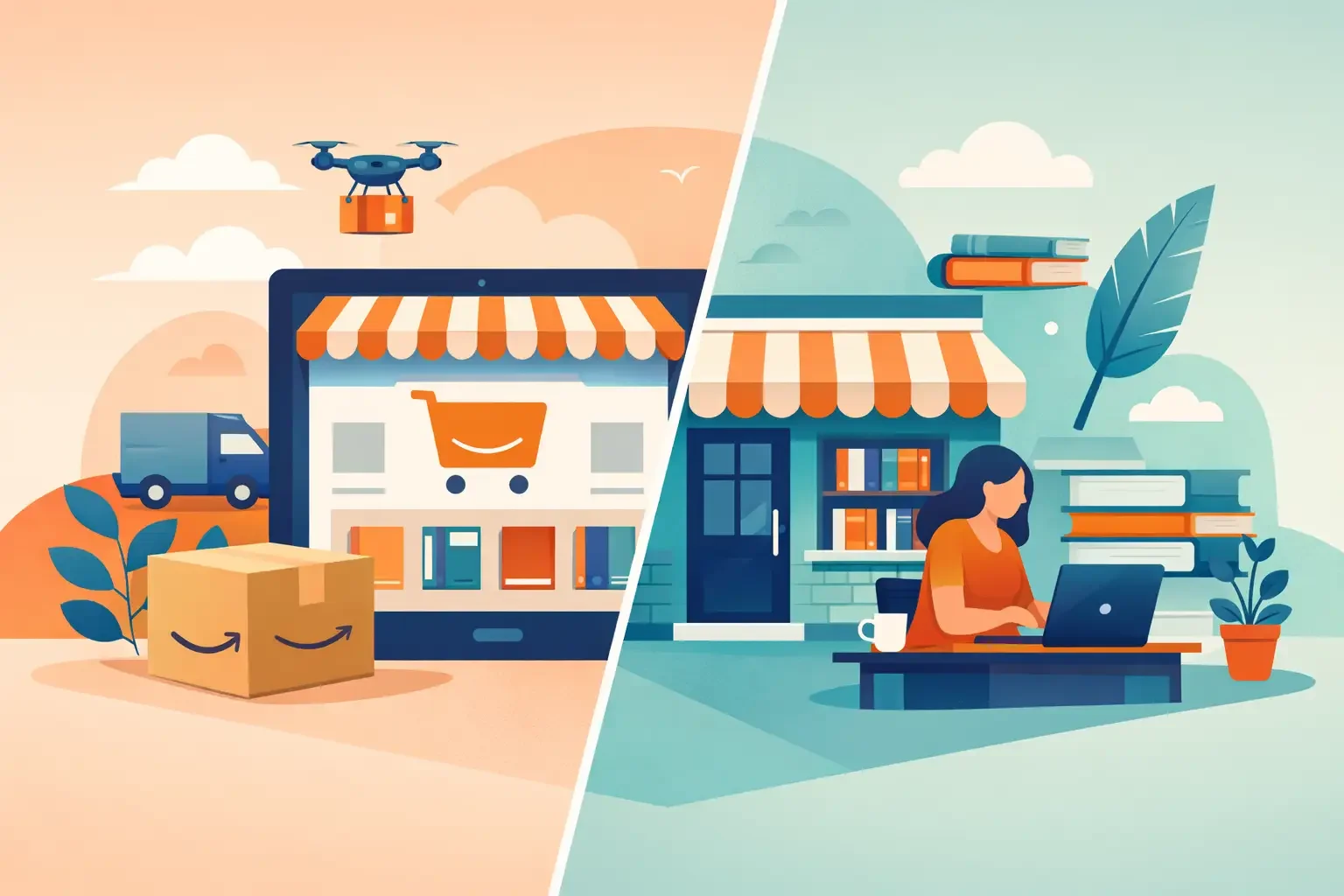
You spot a book that looks like your kind of chaos - murder, secrets, maybe a wrecked life or two by chapter three - and then the real question hits. Do you grab it on Amazon, or buy straight from the author’s store? That’s the heart of amazon books versus author store, and the answer is less about one being better in every case and more about what kind of reader you are when the moment to buy arrives.
Some readers want pure speed. One click, instant delivery, done. Others want something Amazon cannot really fake - a signed paperback, a little more connection to the person who wrote the story, maybe the feeling that their money lands closer to the source. If you read fast, collect signed editions, bounce between Kindle and paperback, or like supporting indie fiction without giving up convenience, the choice matters.
Amazon books versus author store: what changes for the reader?
At first glance, both paths get you the same novel. The killer is still loose. The spaceship still burns. The protagonist still gets dragged into hell with no clean way out. But the buying experience can feel very different.
Amazon is built for speed and scale. It gives you familiar checkout, fast shipping on many items, customer reviews, and multiple formats in one place. If you already live on Kindle or use Kindle Unlimited, Amazon is often the quickest route from curiosity to page one.
An author store works differently. It is usually more focused, more personal, and built around the books that author wants to put directly in readers’ hands. That often means signed paperbacks, occasional bundles, a cleaner catalog, and a stronger sense that you are buying from a creator instead of from a giant machine.
Neither option wins every category. Amazon usually wins on frictionless convenience. The author store often wins on personality, collectability, and direct support.
Why Amazon still dominates for many buyers
Let’s be honest - Amazon is hard to beat when you want a book right now. If you read on Kindle, the gap gets even wider. You can buy an ebook and start within seconds. If a title is enrolled in Kindle Unlimited, subscribers may not even need to buy it outright. For binge readers tearing through thrillers, sci-fi, or paranormal suspense at a brutal pace, that matters.
Amazon also gives shoppers a level of comfort they already trust. Payment info is saved. Shipping expectations are clear. Reviews can help readers decide if a book’s style matches their taste. If you are trying a new author for the first time, that social proof can help push you over the line.
There is also the format advantage. Paperback, Kindle ebook, and sometimes audiobook can sit side by side on the same product ecosystem. For readers who switch between devices or want everything in one account, Amazon keeps life simple.
But there is a trade-off. Amazon is efficient because it is impersonal. That speed comes with a stripped-down buying experience that treats one novel much like any other product. If all you want is fast access, perfect. If you want the purchase to feel like part of the reading experience, it can feel flat.
What an author store does better
An author store has a different kind of energy. It feels closer to the action. You are not browsing a warehouse. You are stepping into one writer’s world.
That matters most with signed paperbacks. A signed copy is not just a reading format. It is a keepsake. For genre readers who love shelves full of deadly covers, cracked futures, haunted towns, and high-speed wreckage, a signed edition has weight. It turns a paperback into something personal.
Direct stores also tend to reflect the author’s brand more clearly. If the books promise mayhem, danger, and momentum, the store can carry that same pulse. You get a tighter catalog, a stronger sense of what the author writes, and a less cluttered path to the titles that match your taste.
There is also the support factor. Buying direct usually means more of the sale reaches the author. For readers who want to help an indie writer keep producing fast, high-stakes fiction, that is a real benefit. You are not just buying a book. You are helping fuel the next one.
And sometimes the perks are practical, not sentimental. Free domestic shipping, signed editions, occasional exclusives, and direct access to future release news can make an author store the smarter buy even before the emotional side kicks in.
Amazon books versus author store on price and value
Price is where things get interesting, because the cheapest-looking option is not always the best value.
Amazon can be competitive on price, especially for ebooks. If you read digitally, Amazon often has the edge because of instant delivery and Kindle integration. For Kindle Unlimited users, the value can be hard to ignore. If a title is available there, your out-of-pocket cost may be lower than buying a paperback direct.
But paperbacks are a different fight. A signed paperback from an author store may cost a little more upfront than an unsigned marketplace copy, yet deliver more value if shipping is included or if you care about collecting. If the direct store offers free domestic shipping, that narrows the gap fast.
Value also depends on your habits. If you devour books once and move on, Amazon ebooks may be the best fit. If you reread favorites, display your collection, or like owning editions that feel distinct, the author store can give you more for your money even if the sticker price is slightly higher.
Which option is better for different kinds of readers?
If you are a digital-first reader, Amazon usually wins. Kindle convenience is brutal in the best way. You see the book, tap the button, and you are in the story before the coffee gets cold.
If you are a collector, the author store usually wins. Signed copies, cleaner branding, and a more personal transaction make the purchase feel special instead of routine.
If you are trying a new author for the first time, Amazon may be the easier doorway. Reviews, samples, and familiar checkout reduce risk. But if you already know you enjoy an author’s style, buying direct often feels better because you know exactly where your support is going.
If you are shopping for a gift, the author store can have an edge. A signed paperback feels more intentional than a standard order pulled from a giant retail system. For fans of fast, cinematic fiction, it also carries a little more punch.
If you want the broadest format choice, Amazon is hard to beat. If you want the most personal version of the book-buying experience, the author store takes it.
The real trade-off: convenience versus connection
This is what amazon books versus author store really comes down to. Amazon is a speed run. The author store is a closer encounter.
One is built to remove every obstacle between buyer and product. The other is built to make the purchase feel more human. Neither instinct is wrong. Sometimes you want instant gratification. Sometimes you want to hold a signed book that came straight from the person who created the madness.
For many readers, the smartest move is not choosing one forever. It is using each option when it makes sense. Buy the ebook on Amazon when you want immediate access. Buy the signed paperback from the author store when you want something worth keeping. That mix gives you both velocity and connection.
For indie fiction readers especially, this balance makes sense. You can still enjoy Amazon’s convenience while showing up directly for the authors whose stories keep you up too late. A writer like Jay Sauls can meet readers in both places for a reason - some people want instant digital access, and some want a signed paperback with a little extra personality built into the purchase.
So where should you buy your next book?
If your main priority is speed, device sync, reviews, and ebook access, go with Amazon. It is fast, familiar, and built for volume.
If your main priority is signed copies, direct author support, and a buying experience with more grit and personality, choose the author store. That route feels less like placing an order and more like backing the next blast of story-fueled chaos.
The best choice is the one that matches how you read. If you want instant pages, hit Amazon. If you want a book with fingerprints on the experience, buy direct. Either way, the mission is the same - get the story into your hands and let the trouble start.