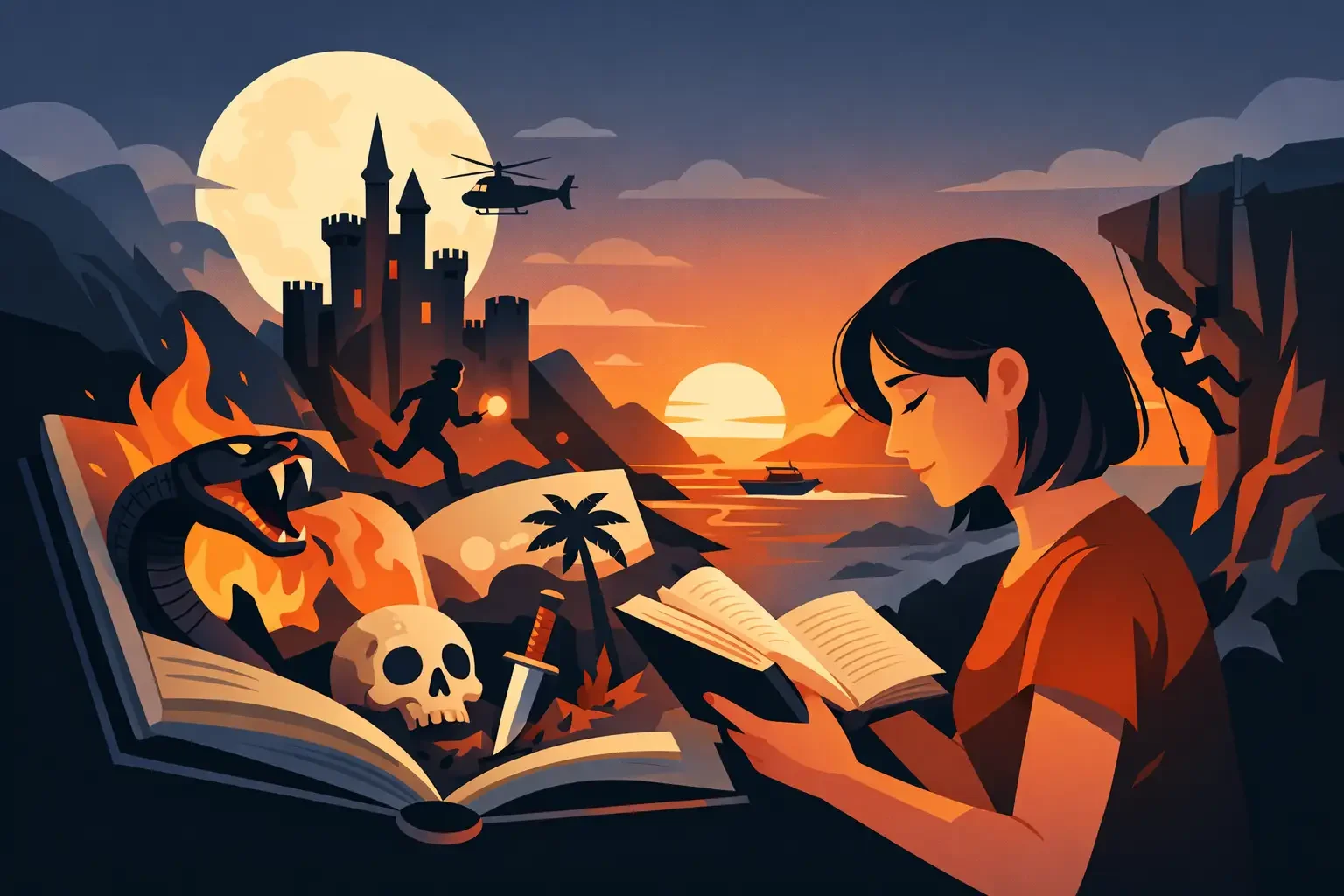
A great book can hit like a tire blowout at 120 miles per hour. One minute you are killing time, scrolling past familiar covers and recycled recommendations. The next, you have found a hostage situation, a corpse in the woods, a pilot trapped beyond Earth, or a stranger with a secret dangerous enough to destroy everyone nearby.
That is what book discovery should feel like. Not homework. Not a maze of vague categories and polite reviews. It should be the moment you spot a premise that grabs you by the collar and makes the next few hours disappear.
Why Book Discovery Feels Broken
Readers have more choices than ever, which sounds like a victory until you are staring at thousands of titles and none of them feels urgent. Algorithms are useful, but they are also creatures of habit. Read one detective novel and suddenly every recommendation is another tired cop hunting another familiar killer. Buy one space opera and the screen fills with endless galaxies, regardless of whether you wanted military action, alien terror, survival, or a crew about to tear itself apart.
Genre labels only get you to the neighborhood. They do not tell you what is happening behind the locked door.
A thriller can be a slow-burning domestic nightmare or a full-throttle chase through a city under siege. Science fiction can mean hard science, cosmic warfare, or a desperate survivor facing something impossible in the dark. Paranormal suspense can be eerie and restrained, or it can put monsters, murder, and mayhem on the same page.
The real problem is not a lack of books. It is a lack of clear promises. Readers who want momentum do not need to be told a novel is "compelling." They need to know what kind of trouble they are buying.
Book Discovery Starts With the Promise
The fastest way to find fiction you will actually finish is to stop searching by broad genre alone. Search for the experience you want next.
Maybe you want revenge. Maybe you want a murder mystery where every witness is lying. Maybe you want engines screaming, a clock ticking down, and a protagonist who has no safe move left. Maybe you want the strange, cold fear of realizing the universe is larger and crueler than anyone imagined.
That emotional target is more useful than a label. It gives you a filter when the options start piling up.
Follow the feeling, not just the shelf
Ask one blunt question before you browse: what kind of ride am I after tonight?
If you want speed, look for language that signals motion and pressure: hunted, trapped, missing, pursuit, final lap, no way out, countdown, deadliest mistake. If you want mystery, look for a body, a disappearance, an old crime, a hidden identity, or a town with something rotten under the surface. If you want speculative danger, look for hostile worlds, impossible signals, forbidden experiments, broken alliances, or creatures that should not exist.
Those details are the ammunition. They reveal whether a book is built around the conflict you want, rather than merely wearing the right genre costume.
Let the blurb do its job
A strong description should establish three things fast: who is in danger, what threatens them, and what happens if they fail. If the copy cannot create tension in a few paragraphs, the book may still be thoughtful or beautifully written, but it may not be the adrenaline hit you wanted.
Pay attention to specificity. "A detective confronts her past" could mean almost anything. "A detective returns to the town where her brother vanished, then finds his name carved into a fresh victim" gives you a story engine. You can feel the danger moving.
This is not a rule that every book must be loud. Slow-burn suspense can be devastating when the stakes are sharp. The trade-off is simple: if you want immediate action, choose a premise with a visible threat. If you want dread that crawls under your skin, give the story more room to tighten the trap.
Build a Reading Trail Instead of Chasing Trends
The bestseller list can point you toward a big release, but it cannot know whether you love a lone-wolf hero, a fractured family, a killer twist, or a monster hiding in plain sight. Better book discovery comes from leaving yourself clues.
After finishing a book, do not just rate it in your head as good or bad. Identify the part that worked. Was it the violent opening? The isolated setting? The relentless pacing? The morally compromised lead? The ending that turned the whole story inside out?
That answer becomes your next search term.
If a racing novel worked because of its speed and sabotage, try more high-stakes competition, criminal conspiracies, or survival stories. If a paranormal mystery worked because the supernatural element made every clue more dangerous, look for occult thrillers, cursed locations, or investigators who cannot trust reality. You are not looking for a clone of the last book. You are following the thread that made it matter.
Use sample chapters like a test drive
The opening pages tell you more than a star rating ever will. Does the voice have teeth? Does the first scene create a question you need answered? Is somebody already in trouble, or does trouble feel close enough to smell?
A sample is not a contract. Plenty of books take time to build. But when you are choosing entertainment, momentum matters. If the first chapter leaves you cold, move on without guilt. There is always another crime scene, crash site, abandoned house, or impossible mission waiting.
Format matters, too. A signed paperback can turn a favorite into something that belongs on your shelf. An ebook is built for instant escapes at midnight. Kindle Unlimited can be a smart option for readers who burn through series quickly. The best format is the one that gets the story into your hands before the mood passes.
Give Unknown Authors One Clean Chance
Familiar names are safe. You know the rhythm, the quality, and the kind of payoff you are likely to get. But safe choices can also make a reading life feel repetitive.
Independent authors are often where you find the wild premises: genre collisions, sharper hooks, faster release schedules, and stories willing to take a hard left into chaos. The risk is that quality varies more widely. The reward is finding a writer whose work feels like it was aimed directly at your taste instead of designed by committee.
Give a new author one fair test. Read the description. Check the opening pages. Choose the book with the clearest stakes and the most dangerous setup. If it lands, you may have found a whole backlist waiting to ruin your sleep schedule.
Jay Sauls writes for readers who want that kind of impact: murder, mystery, cosmic threats, paranormal danger, and high-speed action with no interest in idling at the starting line.
Make Your Next Pick a Little More Reckless
The best discoveries rarely arrive because an algorithm knows you perfectly. They happen because you notice the right spark in a premise and take a chance on it. Pick the book with the locked room, the burning secret, the impossible signal, or the hero already running out of time. Then turn the page and see who survives.