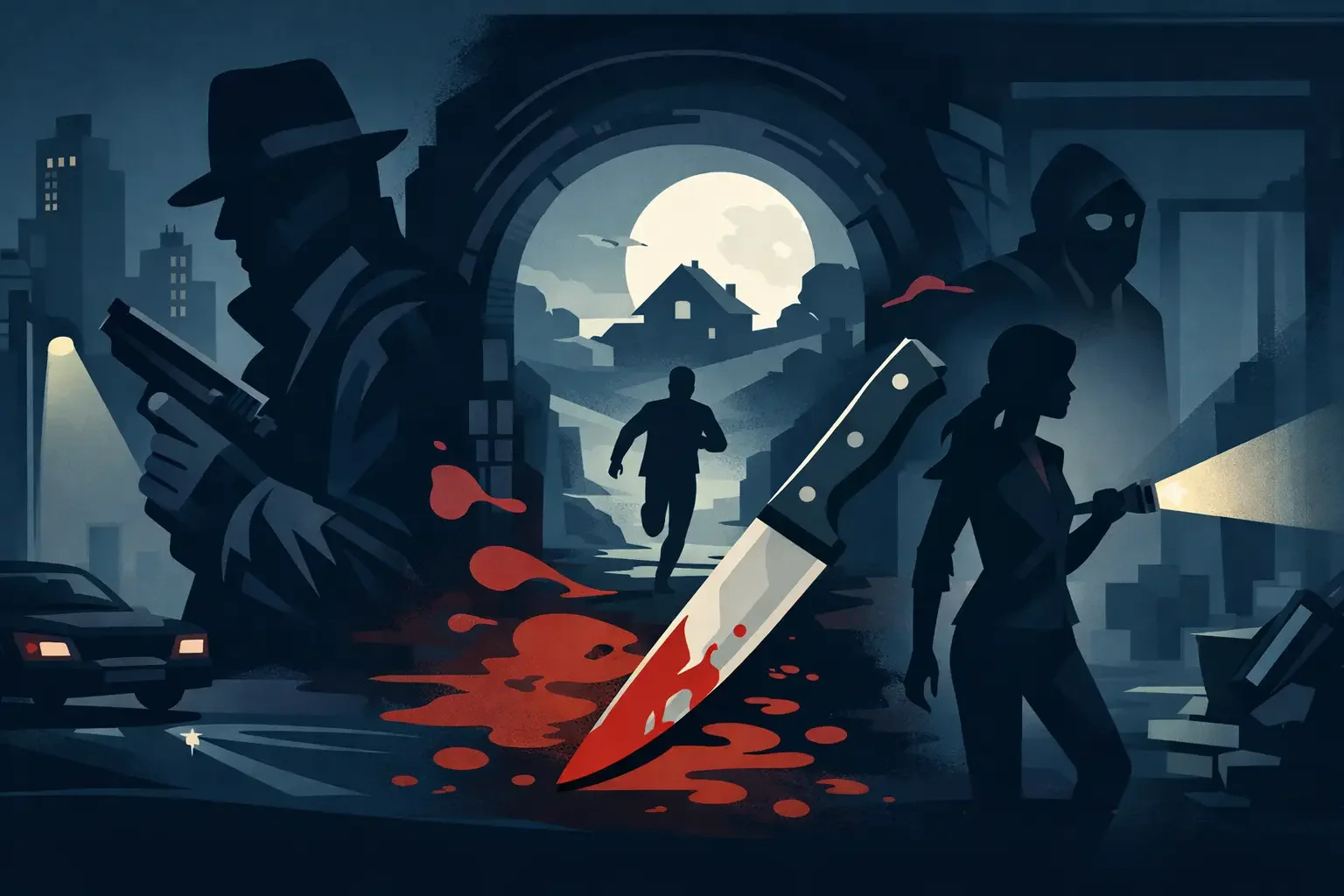
A locked room. A missing witness. A killer who knows the hero’s next move. This guide to thriller subgenres is for readers who want to know exactly what kind of trouble they are signing up for before they crack the spine. Thriller is a big tent, but the promise stays the same: pressure is rising, somebody is in danger, and the clock is never on your side.
The difference is where the danger comes from. Sometimes it is buried in a damaged mind. Sometimes it is sitting in a government file, stalking through a dark house, or waiting at the finish line with a rifle. Knowing the subgenres makes it easier to find your next pulse-pounding read - and easier to avoid the kind of thriller that moves too slowly for your taste.
What Makes a Thriller a Thriller?
A thriller runs on threat and momentum. The protagonist does not merely want something. They need to survive, stop a disaster, expose a secret, clear their name, or get someone they love out alive. Every choice makes the situation worse before it gets better.
Mysteries often ask, “What happened?” Thrillers ask, “What happens if they fail?” Many books are both, especially murder mysteries with a killer still active. But a mystery can spend time studying clues and suspects. A thriller keeps shoving the characters toward a cliff edge.
That is why subgenre matters. A reader looking for a cerebral cat-and-mouse game may not want a globe-hopping intelligence operation. Someone craving a violent chase through back roads may not be in the mood for a courtroom packed with legal strategy. Neither is wrong. They are different flavors of mayhem.
A Guide to Thriller Subgenres for High-Stakes Readers
Psychological thrillers: the enemy gets inside your head
Psychological thrillers turn fear inward. The central threat may be a manipulator, an obsessive ex, a stalker, a cult leader, or the protagonist’s own unreliable memory. These stories thrive on doubt. Who is lying? Is the hero seeing the truth? Is the person closest to them setting the trap?
Expect tense relationships, buried trauma, shifting loyalties, and twists that change what earlier scenes meant. The action may be quieter than in a military thriller, but the pressure can be brutal. Pick this lane when you want paranoia, emotional damage, and a villain who knows exactly where to cut.
The trade-off is pacing. Some psychological thrillers burn slow while they tighten the screws. If you need car crashes and gunfire by chapter two, look for books that combine psychological tension with crime or domestic suspense.
Crime and murder thrillers: bodies, clues, and a killer still moving
Crime thrillers put investigators, detectives, journalists, private eyes, or ordinary people on the trail of violence. Murder is often the engine, but the story becomes a thriller when the case bites back. The killer notices the investigation. The witness disappears. The detective is framed. Another body drops before the truth can surface.
This subgenre is ideal for readers who want clues without sacrificing speed. A strong crime thriller delivers the satisfaction of a mystery alongside immediate danger. You get suspects, motives, crime scenes, and the sharp realization that the wrong answer may cost another life.
Murder mysteries can be cozier, procedural, gritty, or downright savage. Check the premise and tone. A small-town detective chasing a secretive killer is a different ride from a hard-edged cop hunting a predator through a city that has stopped trusting the badge.
Domestic thrillers: danger behind the front door
Domestic thrillers take familiar spaces and poison them. A marriage, a family, a neighborhood, a school, or a friend group becomes the battlefield. The threat often begins with a secret nobody wants exposed: an affair, a missing child, a false identity, a suspicious death, or an old crime that refuses to stay buried.
These books work because the stakes are personal. The hero cannot simply walk away when the person lying to them shares their bed, their last name, or custody of their child. Domestic suspense is often less about explosions and more about betrayal, control, and the ugly things people do to protect their version of a perfect life.
Choose it when you want sharp twists and close-quarters tension. Skip it if you are strictly chasing external action. The battlefield here is usually the kitchen table, and the weapon may be a text message.
Conspiracy and political thrillers: one secret can burn the whole system
Conspiracy thrillers go big. The protagonist discovers evidence that powerful people need erased, then becomes a target. The plot might involve corrupt officials, corporate cover-ups, surveillance programs, assassinations, blackmail, or a disaster engineered for profit and power.
Political thrillers bring presidents, agencies, elections, diplomats, and intelligence operations into the blast zone. The best ones make the machinery of power feel dangerous without drowning the reader in briefing-room jargon. A good conspiracy thriller gives you a clear human problem inside the massive plot: one analyst on the run, one reporter with proof, one former operative who knows too much.
This is the pick for readers who like stakes that stretch beyond one victim. If the hero fails, a city, a country, or the truth itself may go down with them.
Action and military thrillers: move fast or die tired
Action thrillers are built for velocity. Chases, fights, escapes, sabotage, shootouts, heists, and impossible odds are not side dishes. They are the main course. Military thrillers add trained operators, battlefield experience, special missions, weapons expertise, and threats with national or global consequences.
The hero may be a soldier, a mercenary, a cop, a racer, or an ordinary person forced to become dangerous. What matters is forward motion. When the bad guys strike, the protagonist does not spend three chapters processing it. They grab the keys, load the weapon, and hit the road.
These stories can sacrifice puzzle-box complexity for raw momentum, though the strongest ones still give the action emotional weight. A rescue means more when someone the hero loves is trapped. A revenge mission hits harder when the villain took something that cannot be replaced.
Survival thrillers: the world is trying to kill you too
Survival thrillers trap characters where help is far away and the environment has teeth. Think remote mountains, open water, deep wilderness, desert highways, storm zones, isolated compounds, or disaster-struck cities. The antagonist may be a killer, but cold, hunger, injury, weather, and exhaustion are also coming for everyone.
This subgenre strips life down to hard choices. Carry the injured friend or outrun the flood? Trust the stranger with supplies or leave them behind? Go through the woods where someone is hunting you, or stay on the road where they expect you?
Readers who enjoy lean, relentless stories tend to love survival thrillers. The setting does serious work, and every practical detail can become a weapon, a lifeline, or a death sentence.
Techno-thrillers and sci-fi thrillers: danger with a bigger engine
Techno-thrillers use real or plausible technology to create fear: hacking, artificial intelligence, cyberwarfare, biotech, surveillance, drones, or weapons systems gone wrong. The technical material should raise the stakes, not slow the story to a crawl. You want enough detail to believe the threat, then you want the threat to explode.
Sci-fi thrillers push farther into the unknown. The setting may be a hostile planet, a collapsing space station, a future police state, or a ship carrying something that should never have been found. The core thriller machinery remains intact: pursuit, secrets, limited time, and a protagonist boxed in by forces larger than themselves.
Pick these when you want your suspense with cosmic scale, strange worlds, or a nightmare hiding inside the code. The best ones make the science feel immediate because the human stakes are immediate.
Paranormal thrillers: the rules of fear have changed
Paranormal thrillers add ghosts, demons, psychic abilities, cursed places, monsters, or other forces that do not follow ordinary rules. The key difference between paranormal suspense and straight horror is momentum. The characters are not only enduring terror. They are racing to solve, stop, escape, or destroy it.
A haunted house becomes a thriller when the characters have a deadline and a plan, however desperate. A psychic gift becomes a weapon when someone is willing to kill for it. This lane works best for readers who want dark atmosphere but still need a plot that moves like a chase.
How to Pick Your Next Thriller
Start with the kind of pressure you want. For personal betrayal and nasty mind games, reach for psychological or domestic thrillers. For a body count and an active investigation, pick crime. For black ops, conspiracies, and a wider blast radius, go political, military, or action. If the setting itself feels like an enemy, survival is your lane. If you want monsters, future tech, or cosmic trouble without giving up speed, try paranormal or sci-fi suspense.
Then look at the promise in the book description. Words like “unreliable,” “obsession,” and “secret past” point toward psychological danger. “Detective,” “serial killer,” and “missing person” signal crime. “On the run,” “classified,” “assassin,” and “countdown” usually mean the throttle is already down.
The right thriller is not the one with the fanciest label. It is the one that puts the danger you crave on page one, keeps the pressure climbing, and leaves you thinking, just one more chapter, right up until the last shot is fired.