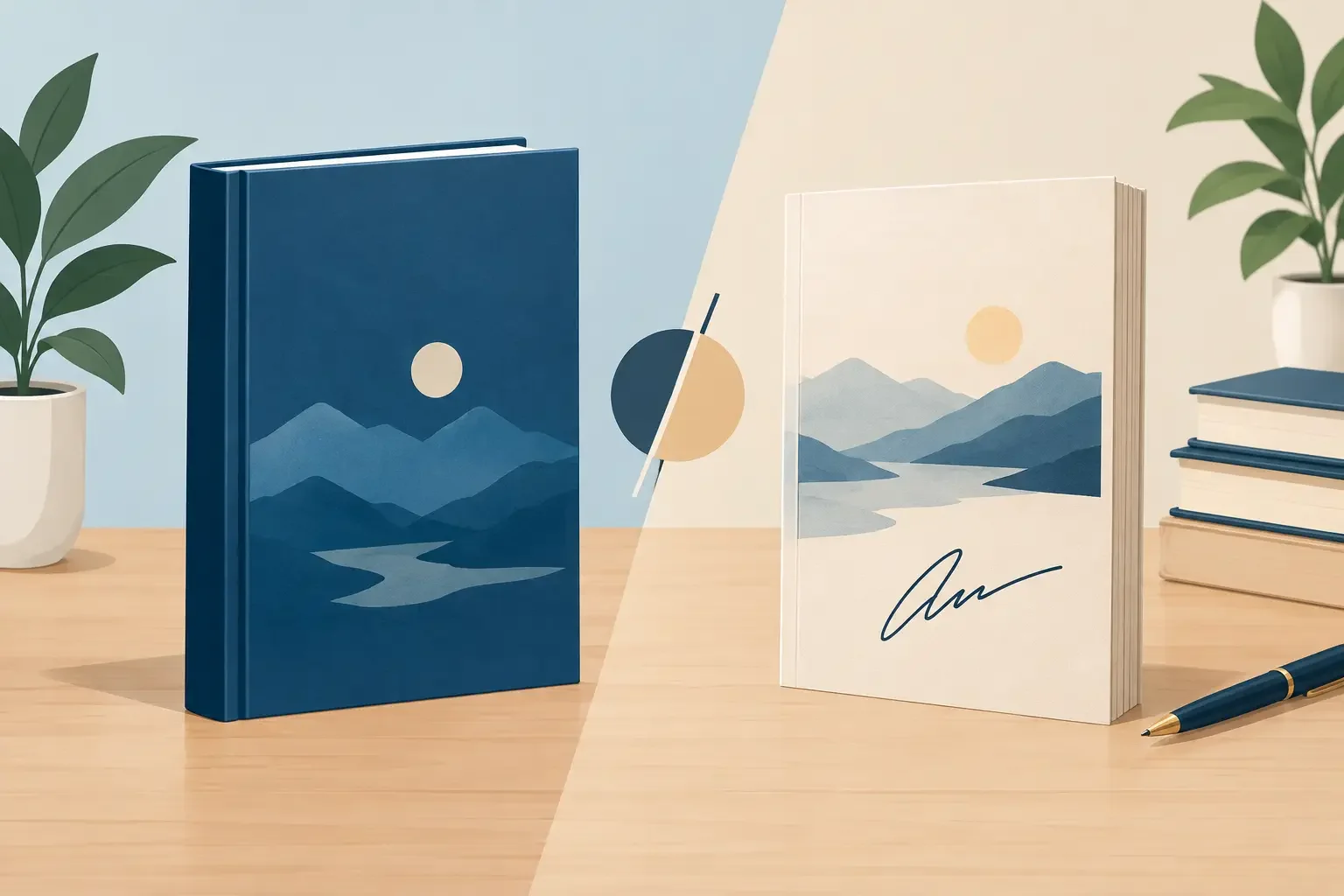
A book can be a weapon, a getaway car, a crime scene, or a portal to somewhere dangerous. But before the first body drops, the engine screams, or the shadows start moving, there is one choice to make: hardcover versus signed paperback.
For readers who love physical books, this is not just a question of format. It is a question of how you want the story to live after the final page. Do you want a tough, display-worthy edition built for years on the shelf? Or do you want a paperback carrying a real author signature, a little piece of the person who dreamed up all that mayhem?
Neither choice is automatically better. The right one depends on how you read, what you collect, and whether you see books as battle-tested entertainment, shelf trophies, or both.
Hardcover Versus Signed Paperback: The Main Difference
Hardcovers are built to feel substantial. They have rigid boards, heavier paper stock in many editions, and a protective dust jacket or printed case cover. Put one in your hands and it feels like an event. It belongs on a shelf beside other books that have survived a dozen moves, a few bad spills, and years of rereading.
A signed paperback takes a different route. The paperback itself is lighter, more flexible, and easier to carry, but the signature adds something no standard edition has: a direct connection to the author. Ink on the title page turns a mass-produced object into a personal copy. It can feel like proof that the book came from the source, not a warehouse shelf.
The practical difference comes down to construction versus connection. Hardcover usually wins on physical durability and presentation. Signed paperback often wins on price, portability, and collector appeal that feels personal rather than formal.
When a Hardcover Earns Its Place
A hardcover is the heavy hitter. If you buy books you plan to keep for a long time, lend carefully, or display in a home office, it has a real advantage. The hard boards protect the pages from bent corners and crushed spines. A well-made hardcover can take punishment and still look sharp.
That matters for stories you know you will revisit. A favorite thriller with a killer reveal, a science fiction adventure packed with cosmic wreckage, or a mystery that deserves another look after you know the truth can earn hardcover status. These are the books that become part of your permanent lineup.
Hardcovers also deliver a certain kind of cinematic presence. They look good on a shelf. The larger trim size gives cover art more room to hit hard, whether it is a blood-red skyline, a haunted road, a burning race car, or a figure running from something unseen. For readers who enjoy building a library that looks as dangerous as the stories inside it, that matters.
There is a catch: hardcovers cost more. The higher price is not just a publisher trick. Materials, binding, printing, storage, and shipping all add weight to the bill. If you buy several books a month, hardcover habits can turn a fun reading budget into a crime scene.
They are also less convenient on the move. A hardcover in a backpack is solid, but it is solid in the same way a brick is solid. Great for a bookshelf. Less great for a packed flight, a long commute, or a beach bag already carrying sunscreen and snacks.
Choose hardcover if you want permanence
Hardcover makes the most sense when the physical object matters as much as the reading experience. It is a strong fit for collectors, gift buyers, and readers who want their favorite novels to survive years of handling without looking wrecked.
It can also be the better choice for a special release. If a book is a major sequel, a long-awaited finale, or the kind of story you have been counting down to, paying extra for a larger, sturdier edition may feel right. Not every book needs the premium treatment. The ones that do usually announce themselves fast.
Why a Signed Paperback Hits Different
A signed paperback is built for readers who want the story close, not locked behind glass. Paperbacks are easier to hold one-handed, easier to toss into a bag, and easier to read in the places where real life happens: waiting rooms, hotel lobbies, lunch breaks, airport gates, and the passenger seat before a road trip goes sideways.
The signature changes the equation. A signed book is not necessarily rare in the investment-grade sense, especially when an author signs copies regularly. But rarity is not the only reason people collect books. Sometimes the value is emotional. You bought the book directly. The author touched that title page. Your copy has a small mark of the human being behind the monsters, conspiracies, wrecks, and close calls.
For fans of independent fiction, that connection is part of the fun. Buying a signed paperback can feel less like grabbing another product and more like backing the writer whose work kept you up too late. You get a physical edition with a personal edge, often at a price that stays closer to a normal paperback than a premium hardcover.
There is no pretending paperbacks are indestructible. Their covers can curl, corners can bend, and repeated rereads can crease the spine. A signed copy deserves a little care. Keep it dry, avoid stuffing it under heavier books, and do not leave it baking in a car. The signature itself should last if the book is stored out of direct sunlight and away from moisture.
The signature is for fans, not speculation
Buy a signed paperback because it means something to you, not because you expect it to finance an early retirement. Most modern signed books are best treated as reader collectibles. Their real payoff is the moment you open the cover years later, see that autograph, and remember why you picked up the book in the first place.
That makes signed paperbacks especially good gifts. A standard paperback says, “I thought you would like this.” A signed copy says, “I found you something with a little more bite.” For a thriller fan, mystery addict, or reader who loves stories with engines, ghosts, killers, and impossible odds, that extra touch lands.
Price, Shipping, and the Real Cost of Ownership
The sticker price is usually the clearest dividing line. Hardcovers are commonly the more expensive format, while paperbacks offer the lower-cost path into a new story. A signed paperback may cost more than an unsigned store copy, but it can still come in below a hardcover while delivering a collector detail that an ordinary edition does not have.
Shipping can complicate the choice. Hardcovers weigh more, which can raise delivery costs and make them more expensive to send as gifts. Paperbacks travel lighter. For readers building a stack of books rather than buying one special edition, that difference can add up quickly.
Still, low price should not automatically decide the fight. If a hardcover is the copy you will keep for decades, the higher upfront cost may be worth it. If you want a signed paperback you can read hard, carry everywhere, and proudly keep when the cover shows a little wear, that may be the better value.
Think less about price alone and more about cost per memory. The book that gets reread, recommended, loaned, and stared at on the shelf has already earned its keep.
Match the Format to the Reader You Are
Some readers are collectors. They want clean spines, striking covers, and a shelf that looks like a lineup of suspects before the interrogation begins. Hardcover speaks their language.
Other readers are hunters. They want the next fast read in their bag right now. They want to crack the cover on a flight, tear through chapters at midnight, and hand the book to a friend when they are done. Signed paperback is made for that kind of momentum.
And plenty of readers are both. They buy hardcover editions of absolute favorites and signed paperbacks for the stories they cannot wait to get their hands on. That is not indecision. It is using the right tool for the job.
If you are choosing between editions of a Jay Sauls novel, ask one simple question: do you want the shelf-ready heavyweight, or do you want a signed copy that feels like it came straight out of the action?
A Final Call Before You Open Page One
Choose hardcover when you want armor, presence, and a book built to stand its ground. Choose signed paperback when you want a personal keepsake that can ride with you into the next late-night reading binge. Either way, pick the edition that makes you want to open it immediately, because the best format is the one that gets you into the story before the danger starts.