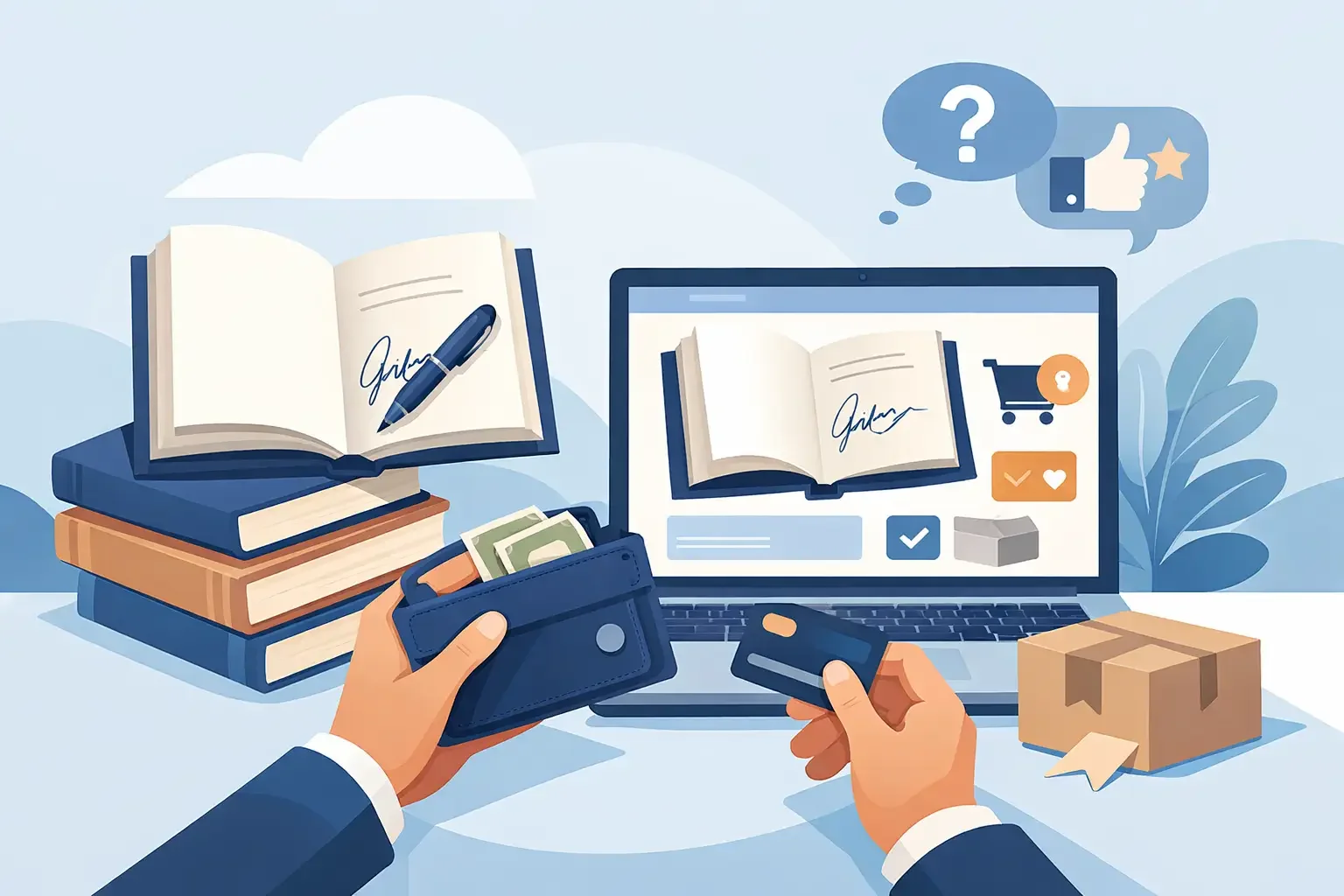
A signed paperback is more than a book with ink on the title page. It is proof that your favorite story passed through the hands of the person who built the bodies, secrets, explosions, and bad decisions inside it. Knowing how to buy signed paperbacks means knowing where the real copies live, what you are paying for, and how to get that book onto your shelf without getting burned.
For readers who want the physical edition, the signature adds a personal hit of adrenaline. Maybe it is a thriller you stayed up too late to finish. Maybe it is a sci-fi survival story, a paranormal nightmare, or a mystery with a killer hiding in plain sight. A signed copy turns that reading experience into something you can keep.
Start With the Author’s Official Store
The cleanest route is usually buying directly from the author’s website or official shop. Independent authors often sell signed paperbacks themselves because it gives readers a direct line to the source. You are not guessing whether a third-party seller found a copy in a warehouse, copied a signature, or listed an unsigned book under the wrong description.
An official store should clearly state whether the paperback is signed, whether personalization is available, and where it ships. Look at the product description before you hit checkout. “Signed” and “signed by the author” are strong, clear language. “Signature edition,” “special edition,” or a photo showing a signed book can be less definite unless the listing confirms exactly what arrives.
Direct ordering also has a practical upside: the author controls the stock. That matters when you want a particular title, a first-run printing, or a bookplate signed specifically for you. Jay Sauls, for example, offers signed paperbacks directly to readers, giving fans of fast, high-stakes fiction a way to put a personal edition on the shelf instead of settling for a standard retail copy.
How to Buy Signed Paperbacks From Other Sellers
Sometimes the author is sold out, no longer ships to your location, or the book is an older release. That is when independent bookstores, convention sellers, used-book sites, and collector marketplaces enter the picture. They can be excellent sources. They can also be a foggy back road with no headlights.
Read every word of the listing. A trustworthy seller identifies the edition, printing, condition, and the location of the signature. Is it signed directly on the title page? Is it on a bookplate? Is it a printed facsimile signature? Those are not the same thing, and the price should reflect the difference.
Photos matter. Ask for clear images of the signature page, copyright page, front and back cover, and any damage if they are not already shown. A seller who cannot provide a photo of the signature for an expensive collectible is asking you to take a blind leap. That may be fine for a cheap reading copy. It is a bad move when you are paying collector prices.
A signature does not have to be lavish to be legitimate. Many authors sign quickly at events, especially when a line is moving fast. The ink may look simple, abbreviated, or different from a polished inscription in a social media post. Focus on the seller’s credibility, provenance, and clear documentation rather than expecting every autograph to look like a work of calligraphy.
Know the Difference Between Signed, Personalized, and Bookplated
These terms get tossed around like they mean the same thing. They do not.
A signed paperback generally has the author’s autograph written in the book itself. A personalized copy includes your name or a short message, such as “To Marcus, enjoy the ride.” It feels more personal, but it can have less resale appeal to collectors because it is tied to one reader.
A signed bookplate is a label signed by the author and placed inside the book. It is still a legitimate signed edition when described honestly, and it is often the most practical option for authors handling large orders. But a bookplate should never be presented as a directly signed page. If the distinction matters to you, ask before buying.
There is also the pre-signed insert: a loose signed page added to the package or bound into a special edition. Again, not fake, just different. Buy the version that makes you happy, not the version someone insists is the only “real” one.
Check the Edition Before You Pay
Collectors care about first editions and first printings for a reason, but most readers buying signed paperbacks are chasing a connection to the story, not a museum piece. Decide which camp you are in before price tags start throwing punches.
If you want a reading copy with a real signature, a later printing in very good condition may be perfect. If you want a collectible, check the copyright page for printing information and compare it to the seller’s claim. “First edition” can mean the first edition design, while “first printing” means it came from the initial print run. Depending on the publisher, those details may be shown through a number line, stated directly, or handled differently.
Do not assume that an older paperback is more valuable. Demand, scarcity, condition, the author’s career, and proof of authenticity all affect price. A brand-new signed copy bought directly from an author can be more meaningful than a worn, overpriced copy with a mysterious signature and no history.
Factor In Shipping, Packaging, and Timing
A signed book deserves better than being rattled around in an oversized box with one strip of tape. Before ordering, check the seller’s shipping policy, estimated dispatch time, and damage policy. Direct author orders are often packed by a small team, sometimes by the author, so fulfillment may take longer than a massive retailer. That is the trade-off for a more personal purchase.
If you are ordering during a new release, holiday season, or convention stretch, build in extra time. Authors may be traveling, signing stock, or catching up after an event. A few days of patience is reasonable. Weeks without an update is different. Keep your order confirmation and contact the seller politely if the stated processing window has passed.
For a gift, do not cut it close. Personalized orders can require extra handling, and weather, carrier delays, and damaged-package reroutes do not care about birthdays. Order early enough that the book has room to survive the journey.
Protect Yourself Without Killing the Fun
Buying signed fiction should feel like adding ammunition to your bookshelf, not preparing for a courtroom battle. Still, a few simple habits protect your money.
Use a payment method with buyer protections. Save screenshots of the listing, especially any statement that the copy is signed or personalized. Keep emails confirming special requests. When the package arrives, inspect it before throwing away the mailer. If there is damage, take photos right away.
Be suspicious of a deal that looks impossibly cheap, particularly for a scarce title or a signature from a major author. Low prices are not automatic proof of a scam. Some sellers simply want a fast sale. But vague descriptions, stock photos, no return policy, and pressure to pay outside the platform are a bad combination.
The same goes for “signed” copies sold through giant retail marketplaces. Some are legitimate inventory from bookstore partners. Others are ordinary editions incorrectly categorized by a seller. Unless the listing specifically guarantees a signed copy, assume it is unsigned. Retail availability is great for grabbing a paperback fast. It is not always the best place to chase an autograph.
Make the Signed Copy Part of the Experience
Once the book lands, do not immediately bury it in a dark corner like evidence from an old case. Read it, display it, or save it for the right moment. If condition matters, keep it away from direct sunlight, moisture, food, and overcrowded shelves that bend covers and crush spines.
A signed paperback does not need to be sealed away forever. Stories built on danger, mystery, monsters, speed, and survival are meant to be opened. Just handle the book like the keepsake it is. The signature is the personal mark. The pages are still where the mayhem lives.
The best signed copy is not always the rarest or most expensive one. It is the book you were thrilled to find, bought from a source you trust, and will still be glad to see staring back at you from the shelf after the final page hits hard.