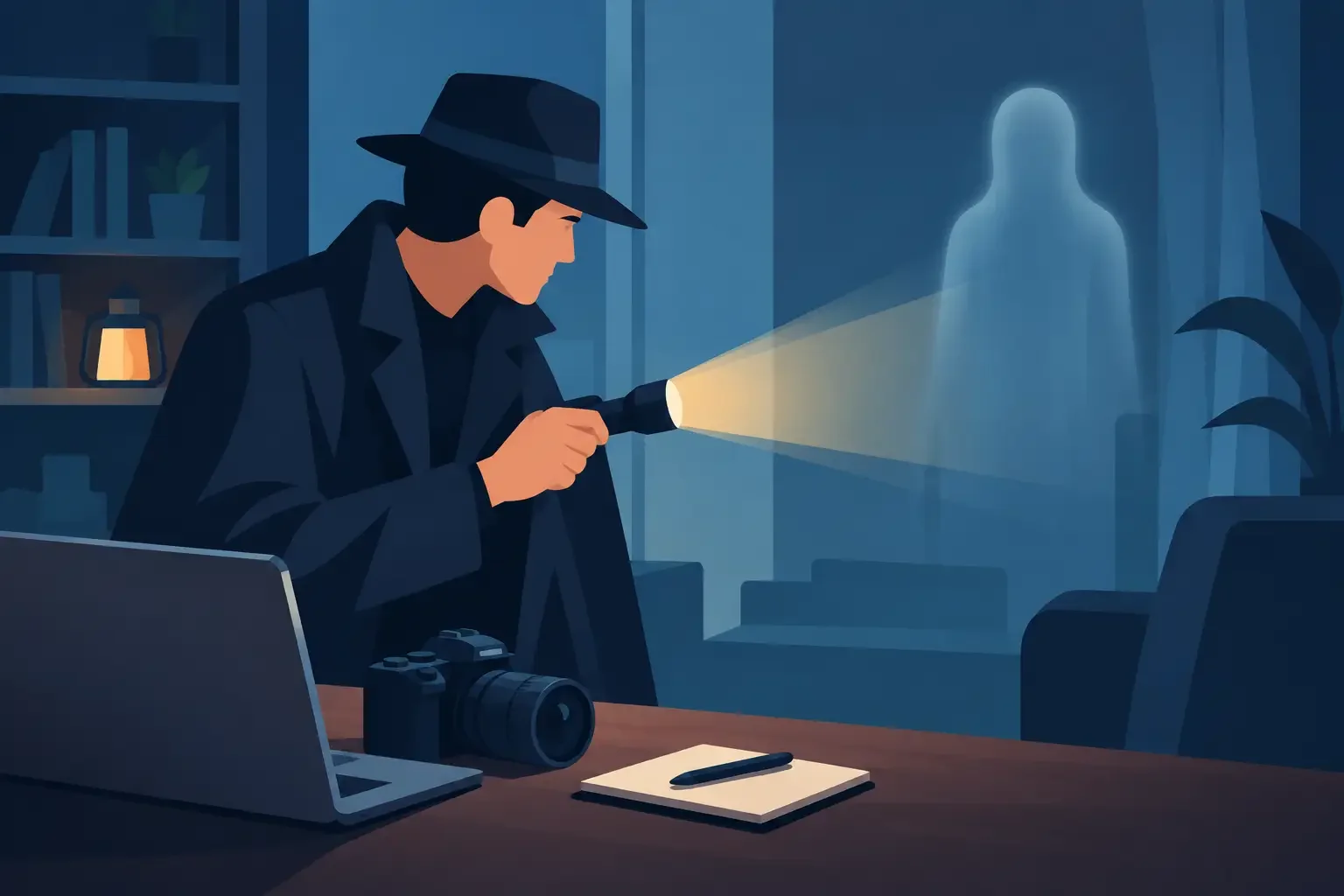
A good paranormal detective review should answer one question before anything else: does this book make you want to follow its investigator into the dark? Not just into a foggy alley or a locked room, but into the kind of nightmare where the witness has no pulse, the murderer may be centuries old, and every clue comes with teeth.
That is the deal readers want from this corner of fiction. A badge, a body, a case nobody else can solve - then something impossible steps out of the shadows and makes the rules bleed. When the formula works, paranormal detective stories deliver mystery, horror, action, and suspense in one hard-charging package. When it does not, readers get a detective who feels passive, magic that fixes every problem, or a mystery buried under pages of supernatural trivia.
The case has to matter
The supernatural hook can be wild. Demons in a small town. Ghosts trapped at a crime scene. A serial killer using old rituals as a roadmap. But the central investigation still needs a clean, dangerous question.
Who did it is only the start. Why did they do it? What are they hunting? Who is next? What happens if the detective gets it wrong? A strong paranormal mystery builds pressure with every answer. One clue points to another, the suspect list narrows, and the cost of failure becomes impossible to ignore.
The best cases do not exist just to showcase a cool creature or an elaborate magical system. The dead body has consequences. The missing person has people who want them home. The crime exposes a secret powerful people would kill to protect. There should be a human wound at the center of all that unholy chaos.
That is what gives a book its punch. Monsters are memorable. Stakes are what make readers turn pages at midnight.
The detective cannot be a spectator
A paranormal detective can be a burned-out cop, a private investigator, a witch with a case file, a reluctant medium, or an ordinary person who made the mistake of seeing something nobody was supposed to see. The job title matters less than the attitude.
Readers need an investigator who pushes back. They make bad calls, take hits, chase leads nobody believes, and keep moving when fear would be the sensible choice. They do not need to be invincible. In fact, a detective who is too powerful can drain all the danger from the story.
A flawed lead is usually the better bet. Maybe they carry guilt from an old case. Maybe their ability is destroying them. Maybe they know the monster because they used to be one of its victims. Those scars should complicate the investigation, not replace it. Trauma is not a personality, and a tragic past cannot carry a plot without real choices in the present.
The strongest investigators have something to lose beyond their own lives. A partner. A family member. Their last scrap of credibility. Their chance to make one old failure right. Give them a reason to stay in the fight after the case turns ugly.
The supernatural rules need limits
Magic is exciting right up until it becomes a skeleton key. If a character can summon answers from the dead, read every liar's mind, or erase danger with a spell, the mystery collapses fast.
A convincing paranormal world has rules, costs, and blind spots. A ghost may remember its murder but not recognize its killer. A psychic vision may show a brutal outcome without revealing how it happened. A spell might demand blood, time, or a favor from something that should never be owed anything.
Limits create suspense because they force the detective to investigate. They still have to question suspects, notice contradictions, follow physical evidence, and gamble on incomplete information. The magic should make the case stranger and more dangerous, not hand over the solution in chapter three.
There is a trade-off here. Some readers want dense lore, ancient orders, and supernatural politics stretching back centuries. Others want the weirdness delivered fast, with the case always in the driver’s seat. Neither approach is wrong. The deciding factor is whether the worldbuilding increases tension or stops the story cold for a history lesson.
What a paranormal detective review should look for
A useful paranormal detective review does more than say a book is dark, thrilling, or full of twists. Those words mean nothing without specifics. Readers deserve to know what kind of ride they are buying.
Does the novel lean toward police procedural, where evidence and interrogation do the heavy lifting? Is it closer to urban fantasy, with monsters, magic, and a wider hidden world? Does it play like horror, where survival matters more than justice? Or does it go full action thriller, with curses detonating, bodies dropping, and the investigator fighting to reach the truth before the city burns?
Pacing matters too. A slow-burn mystery can be terrific if every scene adds dread or sharpens the case. But slow is not the same as stalled. If the first real clue arrives halfway through the book, readers who came for momentum may feel cheated. On the other hand, a book that races from fight to fight without giving the mystery room to breathe can feel like noise.
The ideal balance is escalation. The detective gets a lead. The lead reveals a bigger threat. That threat forces a harder choice. Then the case gets personal.
A review should also be straight about the darkness. Paranormal detective fiction often walks through murder, grief, possession, violence, and fear. Some books keep the gore off-page and let atmosphere do the work. Others put readers inches from the bloodstain. Neither is automatically better, but readers should know whether they are getting eerie dread or full-contact mayhem.
The ending has to earn the reveal
Mystery readers want surprise, but they do not want a trick pulled from thin air. The final reveal should rearrange what came before. Suddenly the overlooked detail matters. The innocent conversation was a warning. The detective’s worst assumption became the killer’s best weapon.
In paranormal stories, this is where authors can get sloppy. A last-minute curse, a previously unmentioned power, or a mysterious elder explaining everything can feel like a cheat. The ending can be strange. It can be shocking. It can crack open the world and leave bigger questions behind. But the solution must grow from clues the reader had a fair chance to see.
Justice does not always mean a neat arrest and a clean ending. The killer may escape. The victim may not be saved. The detective may win only by sacrificing something that cannot be recovered. Those endings can hit hardest when they feel honest to the case.
Why this genre keeps pulling readers back
Paranormal detective fiction takes a familiar promise - somebody will find the truth - and throws it into a world where truth may be buried under curses, lies, and the hungry dead. It gives readers the satisfaction of a mystery while refusing to keep the danger ordinary.
That combination has real staying power. You get the locked-door tension of a murder case, the shadowy atmosphere of horror, and the momentum of an action story. One chapter can bring a quiet interview with a terrified witness. The next can put the detective in an abandoned church with a gun in one hand and a ritual knife in the other.
For readers who like their mysteries clean and realistic, the supernatural may be too much. For readers who want fantasy worlds without investigation, the procedural structure may feel restrictive. But for anyone who wants clues, danger, and a lead character willing to stare down the impossible, this genre delivers a different kind of chase.
Pick the book that promises the kind of darkness you enjoy, then follow the detective past the crime scene tape. Something is waiting on the other side - and it probably knows your name.