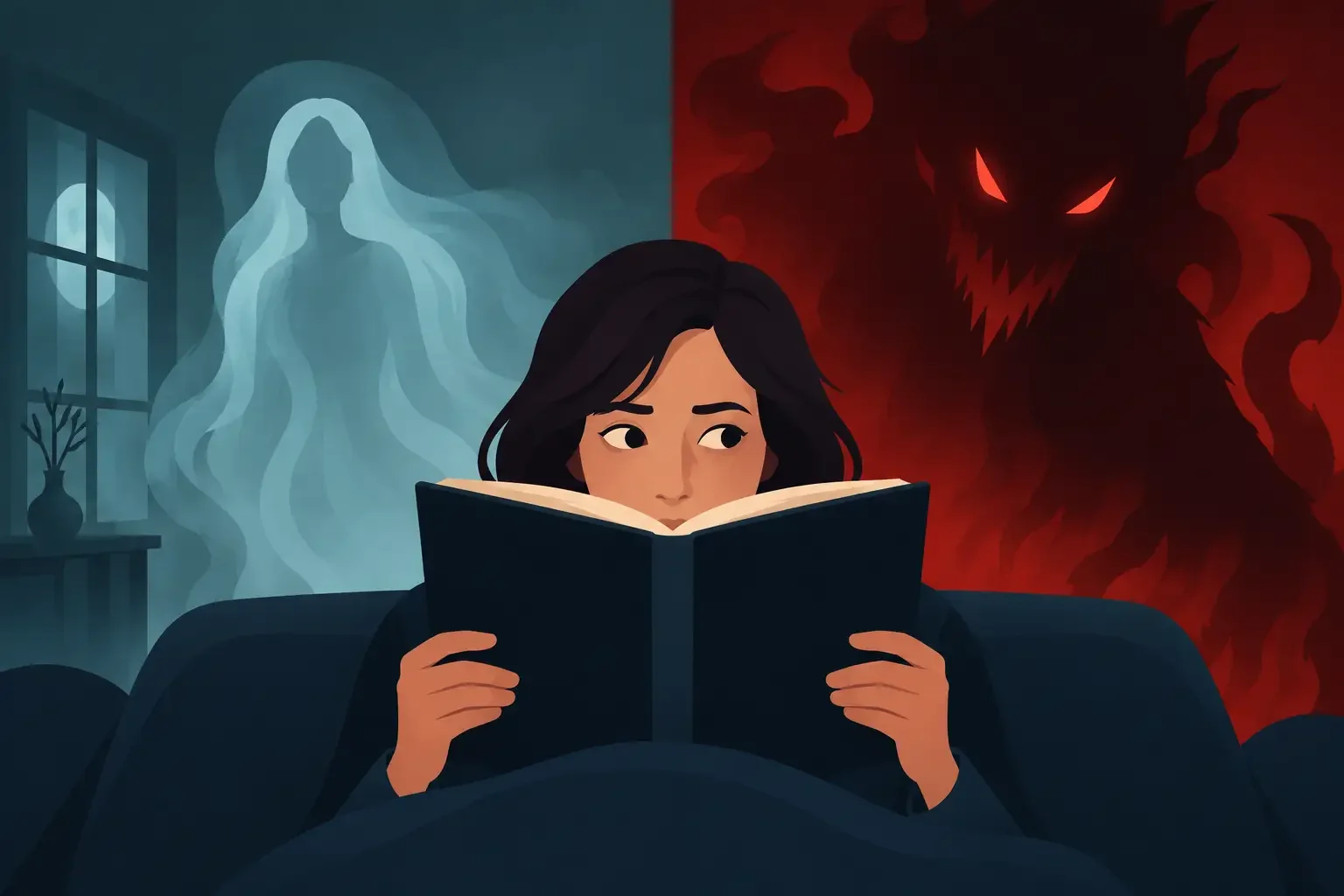
A locked bedroom. A voice on the other side of the wall. A dead man who knows your name. Paranormal versus horror is not a fight between ghosts and monsters. It is a question of what the story wants to do to you once the lights go out. Does it want to pull you into a dangerous mystery with something impossible at its center? Or does it want to make you feel trapped in a nightmare with no safe exit?
For readers who like fast-moving stories, the difference matters. Paranormal fiction can deliver chills, secrets, romance, action, and supernatural mayhem without becoming a full-blown horror story. Horror can use ghosts, demons, curses, and creatures, but it can also leave every supernatural explanation behind and still hit like a hammer.
Paranormal Versus Horror Starts With the Threat
The cleanest way to separate the two genres is this: paranormal is usually about the source of the danger, while horror is about the feeling the danger creates.
A paranormal story includes forces that break the rules of ordinary life. Ghosts walk. The dead speak. A psychic sees what nobody else can see. A shapeshifter hunts under a human face. The strange element may be terrifying, but it can also be wondrous, seductive, tragic, or even heroic.
Horror has a different mission. It is built to disturb, frighten, disgust, or destabilize the reader. The threat might be a killer with a knife, an isolated family losing its mind, an ancient evil in the basement, or a town that has decided someone needs to die. The fear is not just present. It is the engine.
That distinction sounds simple until the genres start bleeding into each other. A ghost story about solving a century-old murder may sit comfortably in paranormal suspense. A ghost story about a malicious spirit slowly breaking a mother’s sanity belongs much closer to horror. Same ghost. Different pressure. Different promise.
The paranormal is an element. Horror is an effect.
Think of paranormal as the gasoline and horror as the fire. You can have gasoline without a blaze. You can also have a blaze without gasoline.
A paranormal mystery might send a reluctant psychic after a missing child, with clues hidden in visions and danger closing in from the living as well as the dead. The supernatural power gives the story its twist, but the reading experience may be closer to a thriller.
A horror novel might trap ordinary people in a storm with a human predator. No specters. No cursed artifact. No magic. It is still horror because every scene tightens the screws and asks one brutal question: who gets out alive?
When Paranormal Stories Turn Horrific
The shift happens when the supernatural stops being merely mysterious and becomes a source of relentless dread. A haunted house is not automatically horror. If the house holds clues to a family secret and the characters can fight back, investigate, and possibly set things right, you may be in paranormal suspense.
Make the house hungry, intelligent, and impossible to escape, and the temperature changes. Now the walls are not hiding the danger. The walls are the danger.
Horror also tends to narrow the room around its characters. Escape routes fail. Trust fractures. The rules become crueler the more the characters learn. In paranormal fiction, knowledge often gives the protagonist leverage. In horror, knowledge can make things worse. Learning the monster’s name may not save anyone. It may be the exact moment the monster notices them.
That does not mean paranormal stories lack body counts or brutality. They can get vicious fast. A werewolf loose in a small town, a revenge-driven revenant, or a cult serving something ancient can bring plenty of blood, panic, and midnight violence. The real question is whether the story makes fear the destination or uses fear as fuel for a bigger ride.
The Stakes Feel Different
Paranormal fiction often gives readers a strange new layer beneath reality. The ordinary world is still there, but there is another war hiding underneath it. That can create a rush of discovery. A detective realizes the victims were marked before they died. A woman discovers the voice in her dreams belongs to someone buried thirty years ago. A man learns his family has been feeding something in the woods for generations.
The danger is real, but so is the possibility of mastery. The protagonist may learn the rules, find an ally, wield a power, or force the supernatural threat into the open. Even when the ending is dark, paranormal stories frequently offer a sense that the chaos has a pattern.
Horror is more willing to strip that comfort away. Its characters may discover the rules only to learn the rules are impossible to beat. The point is not always victory. Sometimes survival is victory. Sometimes getting one person out is the best anyone can do. Sometimes the final page leaves a wet footprint on the floor and lets the reader decide whether the nightmare ever ended.
Paranormal suspense gives fear a target
Paranormal suspense is a sweet spot for readers who want eerie atmosphere but also want momentum. There is a threat, a secret, and usually a path through the darkness. The hero can investigate, chase, confront, and hit back.
This is where supernatural stories collide with mysteries, thrillers, urban fantasy, and action fiction. The ghost may be terrifying, but it is also a witness. The curse may kill, but it also points toward the person who unleashed it. The monster is not just there to scare people. It is tied to a conspiracy, a crime, a buried betrayal, or a countdown to disaster.
Horror makes fear the target
Horror readers often want the pressure to keep climbing until the story becomes unbearable in the best possible way. They want the bad decision, the door that should not be opened, the distant sound that is suddenly right behind the character.
The genre can be supernatural or painfully realistic. Psychological horror turns the mind into a crime scene. Slasher horror turns survival into a savage race. Folk horror makes isolated places and old traditions feel poisonous. Cosmic horror makes humanity look tiny beneath forces too vast to understand.
The shared promise is unease. Horror does not always need a neat explanation because certainty is not its prize. Fear is.
How to Choose Your Next Dark Read
Choose paranormal fiction when you want the impossible to complicate the plot. You may want a haunted secret, a cursed bloodline, a psychic clue, or a creature hunting in the dark, but you also want a story that moves with mystery, danger, and discovery. You want the chills without necessarily wanting to sleep with the lights on for a week.
Choose horror when you want the dark to take control. You want the dread to linger between scenes. You want the danger to feel personal, immediate, and possibly unwinnable. A horror story can be fun, wild, and packed with action, but it should still make you feel like something is wrong long before anyone says it out loud.
Of course, it depends on the book. Genre labels are road signs, not prison bars. A paranormal thriller can go full nightmare in its final act. A horror novel can contain a sharp mystery and an adrenaline-charged chase. The best crossover stories use both sides of the equation: an impossible threat, a hard-driving plot, and enough menace to make every shadow look guilty.
Why the Overlap Works So Well
Paranormal and horror belong together because both genres attack certainty. They make the familiar unsafe. Your house is no longer just a house. Your reflection may not be yours. The person you love may have come back wrong.
But they offer different rewards. Paranormal fiction says the world is stranger than you knew, and maybe you can survive if you learn its hidden rules. Horror says the world is stranger than you knew, and the rules may not care whether you survive.
That choice is part of the fun. Some nights call for a supernatural mystery with a loaded secret and a hero willing to kick in the door. Other nights call for a story that locks the door behind you, kills the power, and whispers from the basement. Pick the kind of fear you want, then turn the page before it finds you.