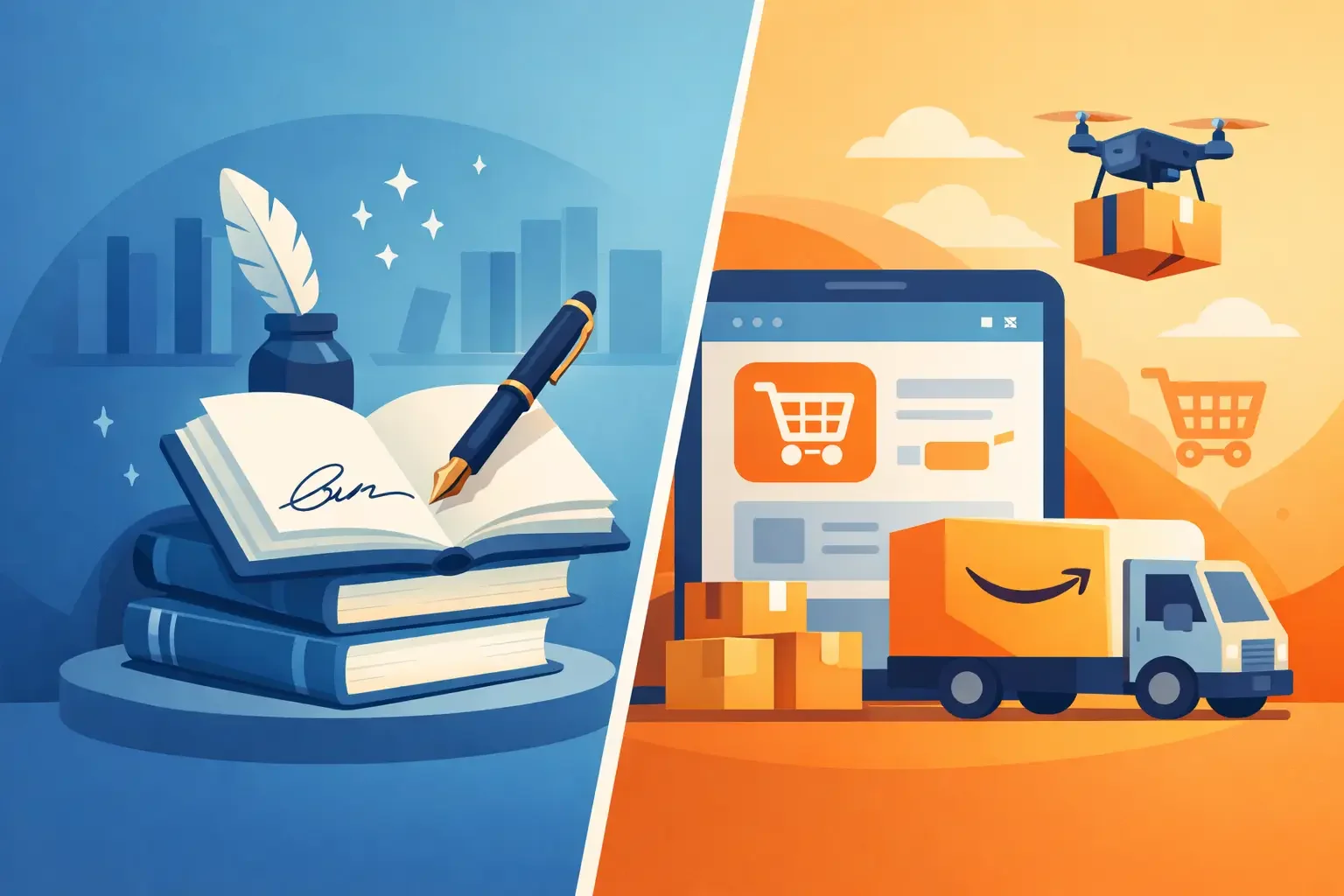
You spot a thriller that looks like pure gasoline - sharp hook, bad odds, somebody in way over their head. Then comes the split-second decision: signed books versus Amazon. Do you grab the personalized paperback straight from the author, or hit the big orange button and have a copy moving your way in minutes? That choice is not just about checkout. It changes what kind of reading experience you get.
Signed books versus Amazon: the real difference
At a glance, this looks simple. Amazon is fast, familiar, and packed with format options. Signed books feel personal, collectible, and a little more special. But for readers who burn through suspense, science fiction, mysteries, and other high-stakes fiction, the better option depends on what matters most in that moment.
If you want instant access, Amazon usually has the edge. Kindle delivery is immediate, paperback ordering is easy, and if you read through Kindle Unlimited, the barrier to trying a new author can be almost nonexistent. That matters when your reading life runs on momentum. You finish one book at midnight, need another by 12:05, and patience is not part of the plan.
If you want the book to feel like an event, signed copies hit differently. A signed paperback is not just a vessel for the story. It carries a trace of the author behind it. For readers who follow an author across multiple releases, that direct connection adds weight. It turns a purchase into something closer to a keepsake.
Why signed copies feel bigger than the price tag
A signed book has a little more voltage. It shows up with presence. Maybe your shelf already looks like a war zone of cracked spines, dog-eared pages, and favorite scenes you know by heart. A signed copy earns a different place there.
Part of that is simple psychology. Physical objects feel more valuable when they carry some sign of human contact. A signature is small, but it changes the story around the object. This is no longer just a paperback you picked up from a giant retail machine. It came from the person who built the world, pulled the trigger on the plot, and wrecked your weekend with one more chapter.
For collectors, superfans, and gift buyers, this matters a lot. A signed novel makes a stronger present than a standard mass-market order because it feels chosen, not just purchased. If you know someone who tears through murder mysteries, paranormal suspense, or sci-fi survival stories, the signed version lands with more force.
That said, the emotional value only matters if you care about it. If you are the kind of reader who throws a paperback in a backpack, reads it on lunch break, then trades it away after finishing, the signature may not change much for you.
Where Amazon wins without breaking a sweat
Amazon dominates for obvious reasons. Convenience is brutal. Search, click, done. If you read across formats, Amazon also gives you choices signed-copy stores usually cannot. You can move between paperback, Kindle, eBook, and sometimes audiobook ecosystems without friction.
That flexibility is a real advantage. Plenty of readers want one thing during the workweek and another on weekends. Maybe you read digitally in bed, listen during commutes, and still want paper on the shelf for your favorites. Amazon makes that kind of switching easy.
Price can matter too. Depending on the title, edition, and shipping setup, Amazon may come in cheaper, especially if you are stacking purchases or using existing subscriptions. For budget-conscious readers who go through several books a month, that difference adds up fast.
Then there is speed. Signed copies are usually packed and shipped by a much smaller operation. That personal touch is part of the appeal, but it also means you may wait longer. If you need a book right now for a trip, a weekend binge, or because you just finished a cliffhanger and need the next installment immediately, Amazon is built for that urgency.
Signed books versus Amazon for different kinds of readers
This is where the fight gets interesting. The best choice changes based on who you are when you buy.
If you are a discovery reader, Amazon probably serves you better first. It lets you sample authors quickly, compare formats, and test a series without much commitment. That is useful when you are still figuring out whether a writer's style matches your taste.
If you are a loyal reader, signed books start pulling ahead. Once an author has earned your trust, buying direct feels more rewarding. You already know the writing delivers. Now the physical copy becomes part of the fandom.
If you are a gift buyer, signed copies usually have the stronger punch. They feel personal before the wrapping paper even comes off.
If you are a binge reader who values speed over ceremony, Amazon is hard to beat. No drama, no delay, no extra thought.
None of these readers are wrong. They are just prioritizing different parts of the experience.
The money question readers do not always see
When you buy direct from an author, more of that money usually stays with the person who wrote the book. That does not mean every purchase has to become a moral crusade. Readers are allowed to care about convenience. Still, if you want to support an indie author more directly, signed copies often do that in a bigger way than a marketplace sale.
For independent fiction writers, direct sales can help fund the next release, cover art, editing, print runs, and the nonstop machinery behind staying visible in a crowded market. That matters in genre fiction, where readers want consistent output, strong packaging, and fresh stories with real momentum.
So when readers choose direct, they are not only getting a signed copy. They are helping keep the engine running. For some fans, that is part of the appeal. For others, it is nice to know but not a deciding factor. Fair enough.
What you give up with each option
Every choice here has a trade-off.
Choose signed, and you may pay a little more or wait a little longer. You also may not get every format you want. Signed direct stores are usually strongest on paperbacks, not digital ecosystems.
Choose Amazon, and you get speed, scale, and flexibility. But you lose some of the personal connection. The purchase feels more transactional. For some readers, that does not matter at all. For others, especially those who follow favorite authors closely, it absolutely does.
There is also the matter of browsing. Amazon is great for endless selection, but that can become noise. Buying direct from an author site is a cleaner shot. You know why you are there. You are not getting dragged into a maze of sponsored products, lookalikes, and algorithm bait.
That cleaner experience can be especially appealing when you already know you want a specific book or author. It keeps the focus where it belongs - on the story.
So which should you choose?
If your priority is immediate access, lower-friction buying, or digital reading, Amazon makes perfect sense. It is built for speed and volume, and for many readers that is exactly the right tool.
If your priority is connection, collectibility, and supporting the author more directly, signed copies are the better play. They feel more personal because they are. For fans of high-intensity fiction, that extra layer can make a favorite book feel even more loaded.
A lot of readers do both, and honestly, that is probably the smartest answer. Grab the Kindle version when you want the story right now. Order the signed paperback when the book earns permanent shelf space. Use Amazon for sampling. Use signed copies for the books that stick a knife in your memory and refuse to leave.
That balance makes sense for commercial fiction readers who move fast but still care about owning something real. One format feeds the binge. The other feeds the collection.
For an indie author brand like Jay Sauls, both paths matter because readers do not all buy the same way. Some want instant delivery and Kindle access. Others want a signed paperback with free domestic shipping and a direct line to the author behind the chaos. The smart move is not pretending one option destroys the other. It is knowing what each one does best.
The next time you are stuck on signed books versus Amazon, do not ask which is universally better. Ask what kind of reader you are today - the one chasing speed, or the one bringing home evidence.