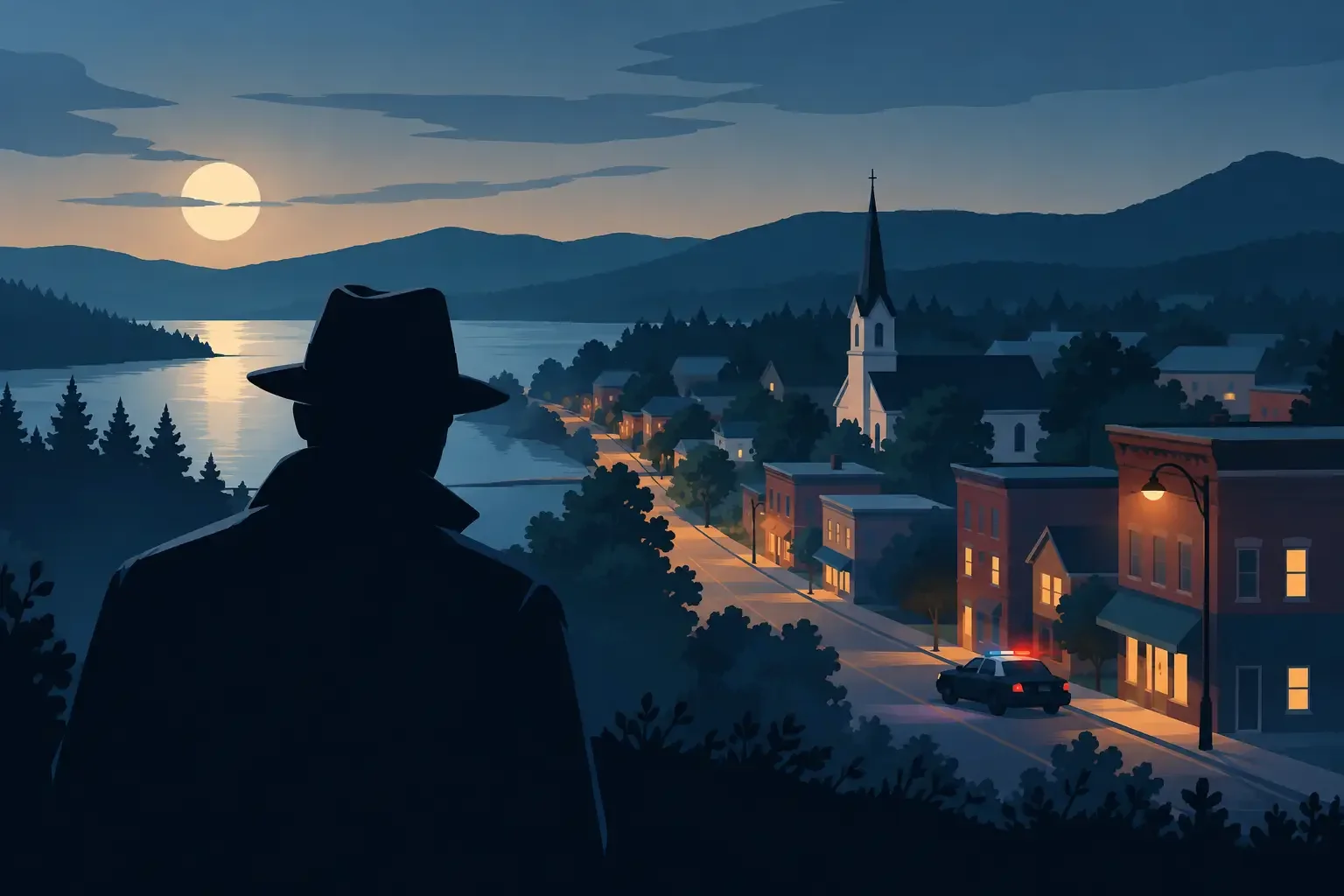
A body turns up behind the high school bleachers. The sheriff knew the victim since kindergarten. Half the town was at the same fundraiser last night, and every smiling face in the room has a reason to lie. That is the pressure cooker behind the best small town mystery examples: nowhere is anonymous, nothing stays buried, and one bad secret can set the whole place on fire.
Small-town mysteries do not need a sprawling city, federal agents, or a globe-trotting conspiracy to hit hard. Give readers one dead body, a tight map, and a community full of people who have known each other too long. Suddenly, the diner booth, the church parking lot, and the old mill all feel like potential crime scenes.
Why small-town mystery examples hit harder
In a big city, a killer can vanish into traffic. In a town with one grocery store and a single road out, everybody notices the unfamiliar truck parked by the lake. That closeness raises the stakes. The detective cannot question a suspect without running into their mother at the pharmacy. The victim's family may own the local newspaper. The person holding back the key clue might also be the protagonist's oldest friend.
The strongest stories use the town itself as an engine of danger. Its history creates motive. Its routines create opportunity. Its gossip spreads misinformation at full speed. A small town can look peaceful on the surface, but the best version has rot under the paint.
10 small town mystery examples built for suspense
1. The missing homecoming queen
Twenty years after a beloved homecoming queen disappeared, her car is pulled from the quarry during a drought. Inside is a cassette tape recorded the night she vanished. It names three people who were at a party nobody admits happened.
This setup works because the original crime has had years to poison the town. The former teenagers are now teachers, business owners, cops, and parents. Solving the case could destroy marriages, careers, and the carefully polished version of local history. The tape is a great ticking clock if someone starts killing the people it names.
2. The locked-room death at the old inn
A storm cuts off the roads, stranding a handful of guests at a historic inn. By morning, the owner is dead inside a room bolted from the inside. The only window has been painted shut for decades.
The locked-room puzzle delivers a clean, high-concept hook, but the town adds weight. Every guest has a connection to the inn's ugly past: a fire, a missing employee, a family fortune built on fraud. Keep the suspect pool tight and the clues physical. Mud on a stairwell, a broken cuff link, a key that should not exist. Readers want the impossible trick, but they stay for the betrayal.
3. The deputy investigates his own brother
The county deputy arrives at a murder scene and finds evidence pointing straight at his older brother, a respected local mechanic. The brother insists he was framed. The sheriff wants a fast arrest before the press arrives.
This is a family-pressure mystery with a loaded emotional fuse. The deputy is not simply chasing a killer. He is choosing whether blood matters more than truth. The trade-off is clear: if the brother is innocent, the deputy may be helping a murderer walk free. If he is guilty, every childhood memory becomes evidence of what the deputy failed to see.
4. The town's annual festival hides a body
The entire town packs Main Street for its famous fall festival. There are carnival rides, barbecue smoke, a parade, and enough noise for a murder to happen ten feet away unnoticed. Then a float breaks down, exposing a body hidden beneath the decorations.
A public event gives a mystery movement. Witnesses saw fragments, not the whole crime. Security cameras caught the wrong angle. Everyone has an alibi because everyone was nearby. Make the festival matter beyond atmosphere: perhaps it celebrates the town founder, and the victim had proof that founder was a fraud, murderer, or thief.
5. The abandoned mine starts claiming victims
A teenager disappears after sneaking into a sealed mine outside town. Searchers find no body, only an old hard hat marked with a name from a mining disaster forty years earlier. Then another person goes missing.
This example leans into isolation and buried history. The mine is a natural maze, dangerous before anyone adds a killer. The deeper threat might be a survivor who never left, a company cover-up, or a cache of evidence powerful people would kill to protect. Paranormal suspense can work here, too, but the answer should still land with force. Whether the ghost is real or not, someone has blood on their hands.
6. The perfect family next door is lying
A new family moves into the only empty house on a dead-end street. They are charming, helpful, and just a little too polished. When the neighbor's child goes missing, the newcomers become the obvious suspects. That is exactly what they want.
This premise thrives on suspicion, not immediate proof. The protagonist may be an ordinary resident with no badge and no authority, which makes every accusation risky. Maybe the family is running from a crime. Maybe they are undercover. Maybe the missing child was taken by someone the town trusts more. The familiar-neighbor angle works best when every friendly conversation starts to feel like surveillance.
7. A cold case wakes up at the diner
A waitress receives a tip with her coffee order: a photograph of her mother, who was murdered when the waitress was six. Written on the back are four words: “Ask who paid the sheriff.” By lunch, the person who left it is dead in the diner parking lot.
This is personal, direct, and built for momentum. The protagonist's investigation forces her through the town's power structure, from the sheriff's office to the mayor's family and the local bank. The old murder should connect to something current, not just a historical puzzle. A past payoff, land deal, or trafficking route can turn a cold case into an active threat.
8. The lake gives back what it took
Every summer, the town holds a memorial for three boys who drowned in the lake in 1998. This year, one of their bodies surfaces miles from where he vanished, with a fresh bullet wound in his skull.
That one discovery flips the town's shared tragedy into a homicide. The old search was wrong. The official story was a lie. Better still, the people who benefited from that lie may still control the town. A lake mystery has built-in mood: dark water, empty docks, foghorns, and secrets thrown overboard. Use the setting, but make the emotional damage the real weapon.
9. The true-crime podcaster comes home
A rising true-crime podcaster returns to her hometown to investigate the unsolved murder that made her leave. Her first episode goes viral. Her second gets a local man attacked. By the third, somebody is feeding her evidence designed to point at the wrong killer.
This gives the story a modern edge and a sharp complication: attention can solve a case, but it can also wreck innocent lives. The podcaster needs to question whether she wants justice or a hit show. The town resents her for reopening old wounds, while the killer may be using her audience to spread fear. Every new episode becomes a public move in a private war.
10. The mayor's daughter never came home
The mayor's teenage daughter disappears after a bonfire at the edge of town. Her abandoned truck is found with the doors locked, her phone smashed under the driver's seat, and blood on the tailgate that does not belong to her.
The obvious version is a kidnapping. The stronger version keeps shifting. She may have staged her escape. She may have uncovered dirt on her father. Or she may be the only witness to a murder committed by someone close to the investigation. The mayor's influence makes every official action suspect, and the missing girl's secrets keep changing the target.
Make the town part of the crime
A memorable small-town mystery needs more than a corpse and a welcome sign. Give the place a power structure. Someone owns the land, someone controls the jobs, and someone has been getting away with murder because the town cannot afford to look too closely. The hero should have something to lose by pushing forward, whether that is family, reputation, a home, or a chance to escape.
Keep the geography useful. Put the river, woods, diner, courthouse, and abandoned property on the page because they create choices under pressure. A killer who knows every back road has an advantage. A protagonist who knows which families hate each other has one, too.
The best final reveal does not merely identify the killer. It changes what the town means. Let readers look back at the friendly cashier, the annual parade, or the old house on the hill and realize the danger was there all along. Then leave one light burning at the end of the road, because somebody inside may still be watching.