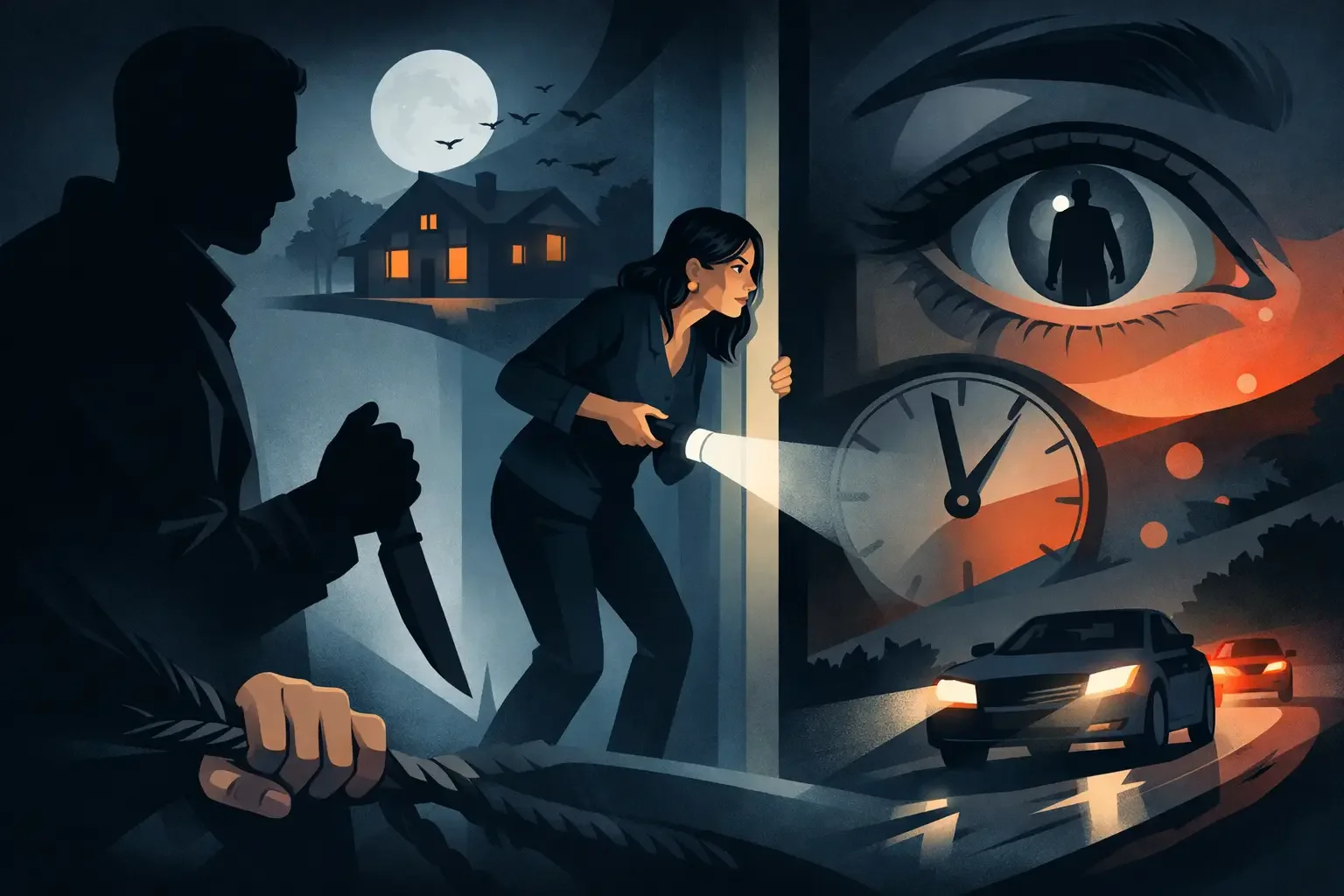
A thriller does not earn a page turn because something explodes. It earns it because the reader knows something could explode at any second - and the person standing nearest the blast has no clean way out. The best thriller tension techniques make danger feel close, personal, and increasingly unavoidable. They turn a simple question into a loaded gun: What happens if the hero is wrong?
For action and suspense readers, tension is the engine. It is the pressure behind a detective opening the wrong door, a driver taking one more lap with failing brakes, or a woman realizing the voice on the phone knows where her child sleeps. Plot supplies events. Tension makes those events matter right now.
Start With a Threat That Has Teeth
Vague danger creates vague emotion. If a character says, “Someone is after me,” readers need to know what that means in practical, ugly terms. Is the pursuer trying to steal evidence, frame them for murder, burn down their house, or kill everyone they love before sunrise?
A threat gets teeth when it has a clear source, a believable capability, and consequences the reader can picture. The villain does not need to reveal every card early. In fact, mystery helps. But the audience should understand that this enemy can reach the protagonist and has already crossed lines most people would not.
A good test is simple: remove the threat from the chapter. Does the scene lose its pulse? If not, the danger may be decoration rather than pressure. Make the threat active. Let it leave a warning, take something valuable, sabotage an escape route, or force the hero to make a terrible choice.
Make the Stakes Personal Before You Make Them Bigger
A bomb under a city is big. A bomb under a city where the protagonist's estranged daughter is trapped is bigger in the only way that counts: emotionally.
External stakes give a thriller scale. Personal stakes give it blood. A cop can save a witness because it is the job. The story tightens when that witness is the cop's former partner, the only person who knows why he was suspended. A scientist can stop a deadly outbreak. The pressure spikes when she helped design the pathogen and her son is already infected.
This does not mean every story needs a kidnapped family member. That move becomes predictable fast. Personal stakes can come from shame, loyalty, a buried crime, a promise, or the fear of becoming the kind of monster the hero is hunting. Find the wound beneath the mission, then aim the plot at it.
Give Every Win a Cost
Easy victories drain suspense. If the protagonist gets the security footage, escapes the warehouse, and calls for backup without paying a price, the reader relaxes.
Instead, make success expensive. The footage clears the hero's name but exposes an innocent ally. The warehouse escape leaves a partner behind. Backup arrives, but the cops answering the call may be working for the enemy. Each win should move the story forward while creating a fresh problem with sharper edges.
That trade-off is where thrillers get mean in the best way. The hero is not merely trying to win. They are choosing what they can survive losing.
Use Time Pressure Like a Closing Steel Door
Deadlines work because they deny characters the luxury of perfect planning. A killer leaves town in six hours. A storm will erase the crime scene by midnight. The race begins in twenty minutes, and the driver knows the sabotage is already in the car.
The key is specificity. “Soon” is soft. “At 11:43 p.m., the ferry leaves with the hostage aboard” gives the reader a clock they can hear ticking. Bring that clock back at natural moments. Not every page needs a timestamp, but the approaching deadline should alter decisions, shorten tempers, and make mistakes more likely.
Time pressure works best when delay has consequences beyond inconvenience. If the hero is late, someone dies, evidence vanishes, an enemy escapes, or a catastrophe becomes impossible to contain. Let the reader see that wall coming long before the protagonist hits it.
Let Readers Know Just Enough More Than the Hero
Dramatic irony is one of the nastiest weapons in suspense. The protagonist walks into a motel room believing it is safe. The reader saw the assassin enter ten minutes earlier. Now even a hand reaching for a light switch can feel dangerous.
Use this carefully. Reveal too much and you kill the mystery. Reveal too little and the scene can become flat because the reader has no reason to dread what is coming. The sweet spot is knowledge with gaps. The audience knows there is a trap, but not exactly where it is, who set it, or whether the hero can spot it in time.
A thriller can also reverse the move. Let the hero know something frightening that the reader does not fully understand yet. A panicked command like “Do not let him see the scar” can carry a chapter on its back. Questions create tension when the answer promises danger, not just trivia.
Tighten Scenes With Conflicting Goals
A tense scene is rarely about one person wanting one thing while nothing resists them. Put people in the room with goals that collide.
The detective wants an informant's name. The informant wants immunity. The detective's captain wants the conversation over before it causes a political disaster. Outside, a sniper wants all three of them dead. Now the scene has layers of pressure, and no one can simply say what they mean.
Dialogue becomes far more dangerous when characters are negotiating under threat. Keep the exchanges pointed. Let people evade, bait, lie, interrupt, and use private knowledge as leverage. Every line should either change the balance of power or make the reader suspect that it is about to change.
Control the Release Valve
Nonstop action sounds exciting, but relentless noise can become numb. Readers need brief valleys so the next drop hits harder. A quiet meal after a chase can build more dread than another car crash if the hero notices the waitress is wearing the dead victim's necklace.
The trick is not to remove tension during slower moments. Change its shape. Swap gunfire for suspicion. Replace pursuit with a confession that does not quite add up. Give the protagonist a few minutes of apparent safety, then plant one detail that makes safety impossible.
These pauses also make characters feel human. Exhaustion, grief, anger, and humor under pressure create connection. When the next bullet flies, readers are not only excited. They are worried about someone they have come to know.
Withhold Information, Not Logic
Mystery is powerful. Confusion is not.
Readers enjoy chasing answers, but they hate realizing the author hid a crucial fact simply to force a twist. If the protagonist knows the killer is their brother, do not pretend otherwise inside the character's point of view. You can withhold the full meaning of what the hero knows, steer attention toward a more urgent problem, or let the truth emerge at the worst possible moment. Just do not cheat.
Fair suspense leaves clues in the wreckage. Once the reveal lands, readers should be able to look back and see the trail. They may not have solved it, but they should believe they could have.
Put the Hero in Impossible Choices
The strongest thriller tension techniques eventually corner the protagonist with a decision that has no painless answer. Save the hostage or catch the killer. Reveal the evidence and destroy an innocent person's life, or stay silent and let a monster walk. Pull the trigger or risk everyone else dying.
This is where spectacle becomes story. A hero who can punch, shoot, hack, or outrun every problem is entertaining for a while. A hero forced to decide which loss they can live with is unforgettable.
Do not manufacture impossible choices just to look grim. The options must grow naturally from the character's history and the plot's pressure. When the choice arrives, readers should feel the trap snap shut because they have watched every earlier decision build its jaws.
End Chapters With Movement, Not Just Noise
A chapter cliffhanger does not always need a body hitting the floor. It needs a change that creates forward pull. The hero opens a file and sees their own name. A witness agrees to talk, then whispers that the villain is already inside the building. A racer takes the lead and hears a voice through the radio: “Your brakes are gone.”
The best endings force a new question or make the old question more urgent. Avoid stopping on empty slogans such as “Nothing would ever be the same.” Show the thing that changed. Make it concrete, visual, and dangerous.
Then deliver on that promise quickly. A cliffhanger is a contract with the reader. If the next chapter dodges the threat for three pages, the pressure leaks out.
Tension is not a trick you sprinkle over a story after the plot is built. It is the force that makes every secret heavier, every clock louder, and every escape route look like a lie. Put your protagonist one bad decision away from disaster, then make the reader desperate to see what they do next.