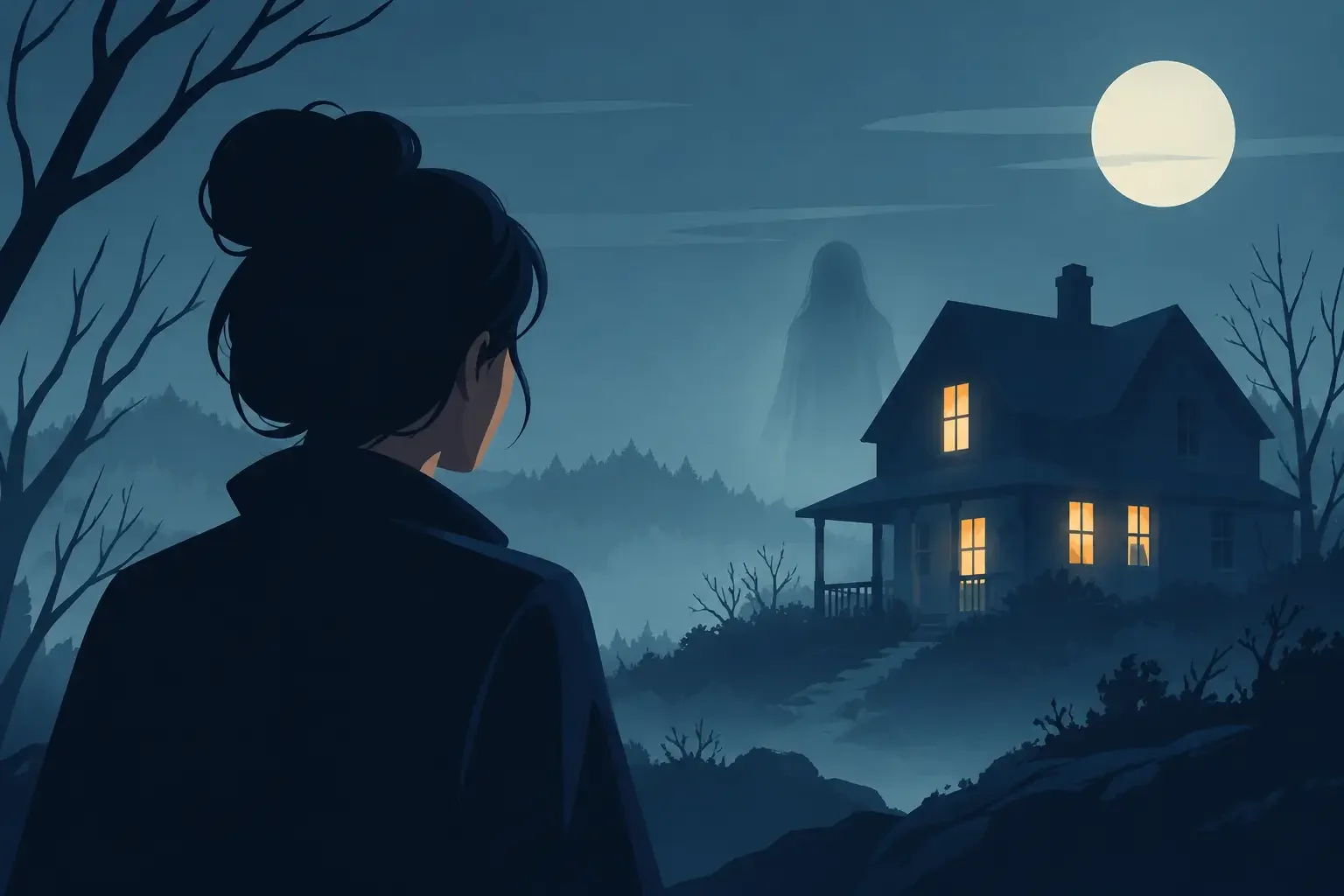
A locked door is bad enough. A locked door that knocks back is worse.
That is the kind of nerve-jangling question at the heart of what is paranormal suspense fiction. It is fiction where the impossible is real, danger is closing in, and somebody has to keep moving long enough to expose the truth. Ghosts, demons, curses, psychic abilities, haunted places, and things with too many teeth can all show up. But the supernatural element is not there just to decorate the wallpaper. It is part of the threat, part of the mystery, and often the one force the characters cannot outrun.
Paranormal suspense is built for readers who want more than a bump in the night. They want pressure. They want a secret with blood on it, a protagonist backed into a corner, and a final stretch where every answer makes the situation worse.
What Is Paranormal Suspense Fiction?
Paranormal suspense fiction blends supernatural elements with the escalating danger and forward drive of suspense. The story may involve a murder, disappearance, conspiracy, family curse, or desperate survival situation. What makes it paranormal is that the threat breaks the normal rules of reality. What makes it suspense is that the characters have urgent reasons to solve, stop, escape, or survive that threat before time runs out.
A detective hunting a killer is a mystery. A detective hunting a killer who appears in victims' dreams before their bodies turn up is paranormal suspense. A family moving into a haunted house can be horror. A family discovering the house is targeting them because of a crime buried in their bloodline, while the exits vanish one by one, is paranormal suspense.
The difference comes down to momentum. The strange thing is not simply frightening. It creates a problem that gets tighter, deadlier, and harder to explain with every chapter.
The Engine: Fear With a Clock Ticking
Suspense works because readers can see danger gathering before the characters fully understand it. Paranormal suspense adds a brutal complication: the danger may be invisible, ancient, or capable of ignoring the laws that protect everyone else.
Maybe the protagonist receives warnings from a dead stranger. Maybe a curse activates when the moon rises. Maybe a creature only attacks in darkness, and the power is about to fail. The details change, but the pressure stays the same. There is a threat. It has rules, even if those rules are hidden. And someone has to figure them out before the body count climbs.
That ticking-clock feeling is why paranormal suspense can hit so hard. A ghost may be terrifying, but a ghost with a deadline is worse. When the haunting is tied to a missing child, a sealed-off crime scene, or a killer who knows exactly how to use the supernatural force, the story stops being a creepy detour. It becomes a race.
How It Differs From Horror, Thrillers, and Fantasy
Genre lines can get messy, and that is part of the fun. A book can carry DNA from several categories at once. Still, the central promise helps readers know what kind of ride they are buying.
Paranormal horror focuses most heavily on dread, shock, and the awful realization that safety may not exist. It can be slow and atmospheric or savage and graphic. The goal is often to make the reader feel trapped alongside the characters.
A conventional thriller usually keeps its threats within the real world: killers, kidnappers, spies, corrupt officials, revenge plots, and conspiracies. It moves fast, often with action and escalating stakes. Paranormal suspense takes that thriller-style urgency and drops an impossible force into the middle of it.
Fantasy generally spends more time exploring a larger invented world, magical systems, and the long-term conflict shaping that world. Paranormal suspense tends to stay closer to familiar reality. The ordinary world is still there, but something rotten has broken through it. A small town, a roadside motel, a police station, or an isolated cabin can become a battlefield once the supernatural rules take over.
The labels overlap. A novel can be horrifying, thrilling, mysterious, and fantastical at the same time. The deciding factor is usually the story's dominant pulse. If you are turning pages because the characters are in immediate danger and answers are running out, you are likely in paranormal suspense territory.
The Ingredients That Make It Hit
The best paranormal suspense stories balance the unreal with consequences that feel painfully real. Readers do not need to believe in ghosts to care about a mother trying to save her son, a cop haunted by an unsolved case, or a fugitive who realizes the voice in the dark knows every crime he committed.
A strong premise often starts with a clean, dangerous hook. A woman inherits a house where every mirror shows a different dead person. A man wakes after a car crash with the ability to see how people will die. A missing-person case leads investigators to a town that has erased the same family from its history for a century. The hook grabs attention, but it needs a human cost underneath it.
Then come the rules. Supernatural threats become more frightening when they are not random. A curse may require an invitation. A spirit may be tied to a location or object. A psychic vision may show only fragments, forcing the protagonist to make life-or-death calls with incomplete information. Rules create strategy, and strategy creates suspense. If characters can learn the rules, they may have a chance. If they get one rule wrong, somebody pays for it.
Finally, there has to be escalation. The first strange event sparks doubt. The second strips away easy explanations. The third makes denial impossible. By the final act, the protagonist should be forced to confront the threat directly, often while dealing with betrayal, guilt, or a secret that hits close to home.
Why the Genre Feels So Personal
A human villain can be arrested, exposed, or killed. The paranormal reaches into more private territory. It can weaponize memory, grief, faith, regret, and fear. It can make a character question whether they are seeing the truth, losing their mind, or being manipulated by something that has been waiting for them all along.
That emotional pressure gives the genre its punch. The monster is rarely just a monster. It might represent an old sin, a family wound, a buried crime, or the one truth the hero refuses to face. When the supernatural threat has a personal connection, every scare lands harder because escape is no longer simple. The danger knows the protagonist's name.
This is also where paranormal suspense can deliver a satisfying payoff. The hero cannot always win through brute force. Sometimes survival requires confession, sacrifice, or trusting the one person they have every reason to suspect. The action matters, but so does the emotional reckoning behind it.
What Readers Can Expect From Paranormal Suspense
Expect an uneasy mix of mystery and menace. You may get crime scenes, missing people, hidden rooms, secret experiments, cursed artifacts, and locations that seem to have their own hunger. You may also get chases, fights, narrow escapes, and endings that force a character to make an impossible choice.
The pacing can vary. Some stories burn slowly, letting dread seep through every quiet scene before the chaos breaks loose. Others start with a corpse, a vision, or a creature attack and never ease off the gas. Neither approach is automatically better. It depends on what you want from the read. Slow-burn paranormal suspense is ideal when you want atmosphere and mounting paranoia. Faster stories are for nights when you want the pages to fly and the danger to hit early.
Not every paranormal suspense novel is gruesome, either. Some lean toward mystery and eerie tension, while others go dark, violent, and relentless. If you prefer high-stakes action, look for stories where the supernatural threat collides with an active investigation, a manhunt, a survival scenario, or a conspiracy. If you prefer creeping dread, choose books centered on hauntings, isolated settings, and unreliable perceptions.
The Real Promise of Paranormal Suspense
At its best, paranormal suspense fiction makes the familiar feel unsafe. The house is not empty. The dead case is not closed. The person in the next room may not be the person you thought they were.
It gives you a mystery to chase, a threat to fear, and characters with too much to lose. The supernatural raises the stakes, but the suspense keeps the story moving like a getaway car with something clawing at the trunk. Pick the kind of darkness that grabs you, then turn the page when the knocking starts.