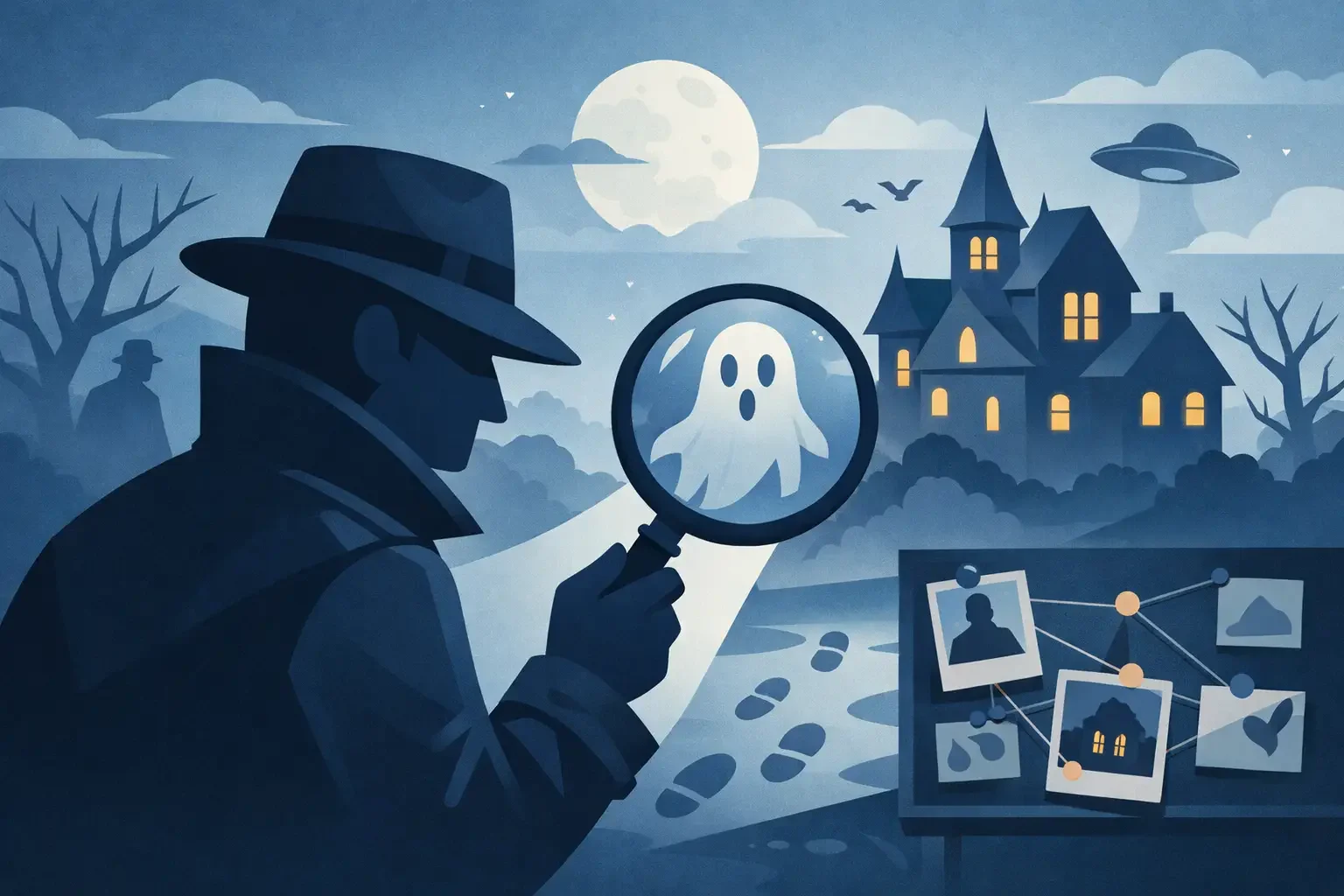
A body in a locked room is bad enough. A body that sits up on the autopsy table, whispers the killer’s name, then goes cold again is a whole different kind of problem. That is the electric charge behind paranormal detective mysteries: a hard-edged investigation where every clue could be evidence, a trap, or something hungry wearing a human face.
These stories do not ask readers to choose between a crime novel and a supernatural thriller. They bring both guns to the fight. There is a killer to catch, a secret to crack, and a force beyond the rules of the living that refuses to stay buried.
Paranormal Detective Mysteries Put Logic Under Fire
A traditional detective story runs on order. Somebody commits a crime, somebody follows the evidence, and eventually the truth gets dragged into the light. The pleasure comes from watching a sharp mind turn chaos into a clean answer.
Paranormal detective mysteries start with that same promise, then set it on fire. The detective may have fingerprints, witness statements, security footage, and a motive. But the suspect has been dead for fifty years. The murder weapon appears only during thunderstorms. The victim’s ghost insists the obvious answer is wrong.
That changes the pressure on every scene. A detective cannot simply trust their instincts when their instincts might be a psychic warning. They cannot dismiss an impossible detail when impossible details keep leaving bodies behind. The case becomes a battle between skepticism and survival.
The best stories keep the detective grounded even when the world is not. Give the investigator a method. Maybe they are a homicide cop who treats séances like interviews. Maybe they are a private eye with a cursed family history and a bad relationship with the local coven. Maybe they hunt monsters, but still carry an evidence bag and know how to read a crime scene.
That contrast is where the genre gets its bite. The supernatural can be wild, but the investigation needs rules. Readers want the chills, sure. They also want the satisfaction of realizing that the strange symbol on the wall, the missing hour, and the terrified witness all pointed to the same brutal truth.
The Case Has to Matter Beyond the Monster
A glowing-eyed demon is not automatically scary. A demon with access to your detective’s dead brother’s memories? Now there is a problem.
The strongest paranormal crime stories make the case personal without making it easy. The investigator might be trying to clear a partner framed for ritual murder. They might be hunting the thing that killed a child years ago, only to learn it has been feeding on their family for generations. The crime should hit close enough to hurt, but the detective still needs a reason to keep moving when fear would be the smarter option.
This genre thrives on emotional stakes because the supernatural is already operating at maximum volume. Ghosts, curses, shapeshifters, ancient gods, and shadowy cults can create spectacle. What turns spectacle into a story is the human cost underneath it.
A grieving mother does not care whether the thing that took her son is technically a wraith, revenant, or extradimensional parasite. She wants to know where he is. A burned-out detective does not need another lecture about destiny. They need to stop the next murder before dawn.
That urgency keeps the story from becoming a catalog of creepy ideas. Every impossible element should make the case more dangerous, more emotional, or harder to solve. Preferably all three.
Rules Make the Horror Sharper
Mystery readers are trained to look for fairness. They want to spot clues, form theories, and feel the click when the answer lands. If magic can solve anything at any time, the detective is just waiting around for the author to wave a glowing hand.
Clear paranormal rules prevent that. If ghosts can lie, establish why. If a psychic vision is fragmented, show what distorts it. If vampires cannot cross running water, make the final chase force the detective to use that weakness before the killer disappears into the night.
Rules do not make the supernatural less frightening. They make it more frightening because readers understand the consequences. A curse with a deadline is worse than a vague bad feeling. A creature that can only enter when invited is terrifying when the detective realizes somebody inside the precinct already opened the door.
There is a trade-off, though. Explain too much and the nightmare loses its teeth. Explain too little and the solution feels like a cheat. The sweet spot is a world with boundaries, secrets, and a few dark corners nobody fully understands.
Why the Detective Is Still the Best Weapon
In a world full of monsters, a detective can look underpowered. No fangs. No spellbook. No ancient prophecy. Just a battered coat, a stubborn streak, and the refusal to leave a question unanswered.
That is exactly why they work.
A paranormal detective is often the last person willing to stand between ordinary people and the darkness. They ask the questions everyone else is too scared to ask. They walk into the abandoned house. They open the file marked DO NOT TOUCH. And when a monster says the rules do not apply, they start looking for the loophole.
This kind of protagonist does not have to be noble every second. In fact, a little damage helps. Maybe they drink too much coffee because sleep brings visions. Maybe they are carrying guilt from the one case they could not close. Maybe they hate the dead because the dead keep calling them at 3:17 a.m.
Flaws give the action weight. A perfect investigator who can talk to ghosts and cast fireballs has no real edge to lose. A tough, frightened, deeply human detective facing something impossible has everything to lose.
That tension fits readers who want momentum. The hero is not sitting in a dusty archive for 200 pages, translating ancient text while the danger politely waits. They are running through rain-slick streets, chasing a suspect who changes shape under the streetlights, with one clue left before the next victim dies.
The Best Cases Blend Fear With Forward Motion
Pacing matters. Paranormal elements can tempt a story to linger in lore, history, and occult terminology. A little atmosphere goes a long way. Readers need enough information to understand the threat, then the plot needs to move.
A powerful structure often works like a tightening noose. The opening crime establishes the impossible. The early investigation reveals a pattern. The middle forces the detective to admit that the threat is real. Then the case turns personal, the body count climbs, and the final confrontation demands more than a clever deduction.
The answer should solve both halves of the story. Who committed the crime? Why did they do it? And what supernatural force made the crime possible, profitable, or catastrophic?
Sometimes the culprit is human and the haunting is real. Sometimes the monster is the murderer. Sometimes the ghost is not asking for justice at all, but revenge. The genre has room for all of it, as long as the reveal feels earned.
A good twist does not merely announce that everything was different than it seemed. It makes readers rethink the evidence. The innocent-looking neighbor, the strange missing tooth, the old police report, the detective’s own recurring nightmare - suddenly they lock together like a loaded weapon.
Atmosphere Is Evidence, Not Decoration
Foggy graveyards, flickering neon, empty churches, blood-marked mirrors, and rundown motels all belong in the toolbox. But atmosphere works best when it does a job.
A storm should hide a sound the detective needs to hear. An abandoned hospital should contain a clue that explains why the victims all vanished from locked rooms. A haunted apartment should reveal character, not just provide another jump scare.
When setting becomes part of the investigation, the story feels cinematic without slowing down. The location is not a backdrop. It is a witness. Sometimes it is an accomplice.
A Genre Built for Readers Who Want More Than One Kind of Trouble
Paranormal detective fiction hits a rare sweet spot. It offers the clue-chasing satisfaction of a murder mystery, the threat of horror, the velocity of a thriller, and the emotional punch of a character forced to confront what they fear most.
It also gives authors room to shift the flavor. A story can be grim and violent, full of occult murders and broken cops. It can be pulpy, funny, and packed with supernatural one-liners. It can lean noir, urban fantasy, psychological suspense, or full-throttle action. The key is not the exact creature in the shadows. The key is that the mystery stays sharp and the danger keeps closing in.
For readers who like their clues bloody, their suspects impossible, and their heroes one bad decision away from disaster, Jay Sauls-style high-stakes storytelling is a natural fit for the genre’s dark alleyways.
The next time a detective finds a clue that should not exist, do not ask whether the case has gotten strange. Ask what wants them to find it - and what will happen if they do.