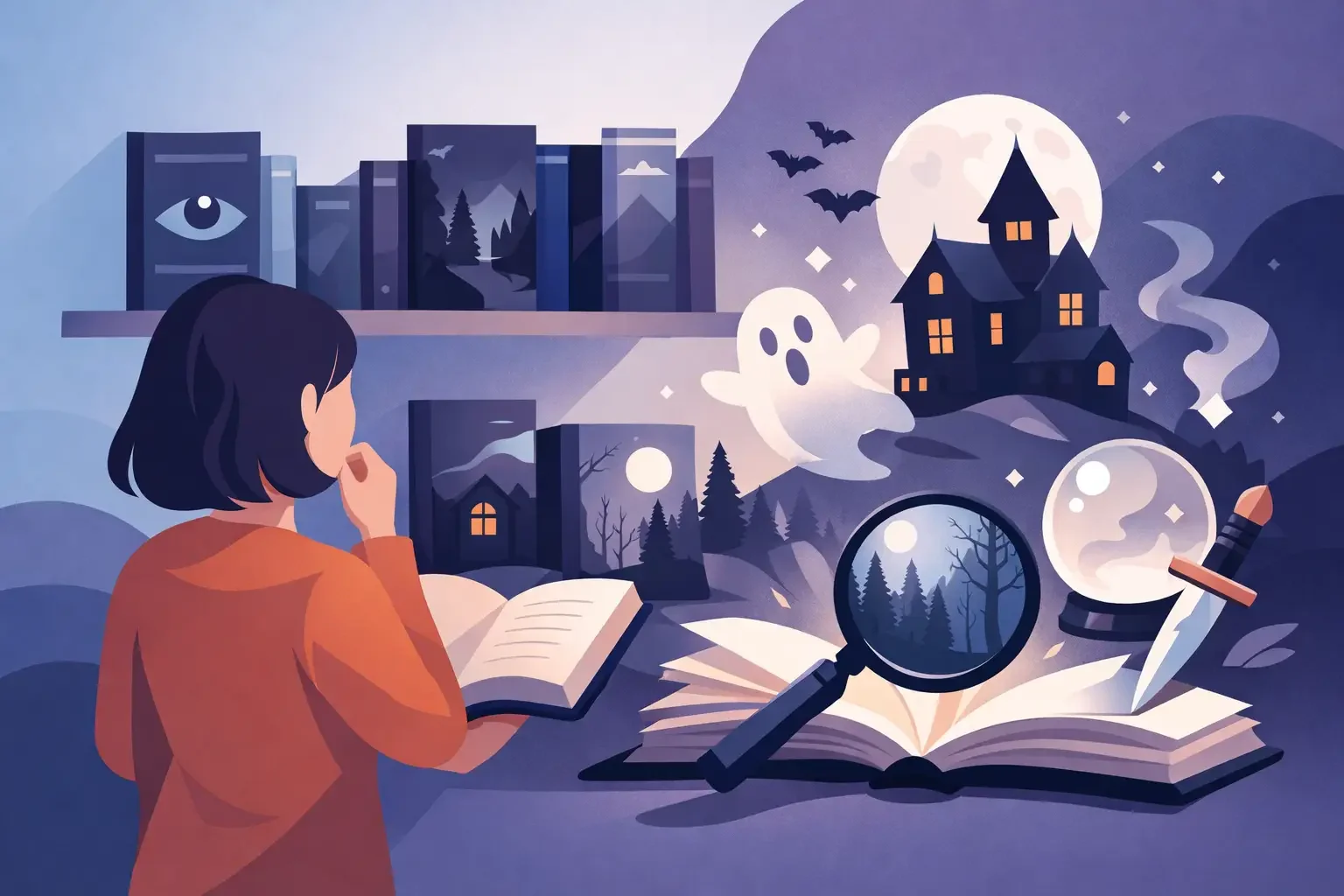
A corpse in a locked room is a good start. A corpse in a locked room that whispers the killer’s name after midnight is better. That is the promise behind a great paranormal mystery: a real investigation with something impossible clawing at the edges. Knowing how to choose paranormal mystery books means finding stories that do not make you choose between a sharp mystery and supernatural mayhem. You should get both.
The genre covers a lot of dark ground. Some books are slow, eerie hauntings where every creaking floorboard matters. Others rip forward with possessed killers, cursed towns, ancient entities, and detectives who have one night to stop the bloodshed. Neither approach is wrong. The right choice depends on what kind of ride you want when you open the cover.
How to Choose Paranormal Mystery Books for Your Mood
Start with the question that matters most: do you want chills, clues, or chaos? Paranormal mystery can lean heavily in any of those directions.
If you want a puzzle first, look for a clear central crime. A disappearance, murder, missing-person case, or buried secret gives the story a hard spine. The ghost, psychic vision, demon, or cursed object should complicate the investigation, not replace it. You want suspects, evidence, false leads, and a final reveal that makes sense even after the supernatural smoke clears.
If you want dread, choose books that emphasize atmosphere. These are the stories built around isolated houses, rural roads, abandoned hospitals, family curses, and places where nobody should be after dark. The mystery may unfold more slowly because the author is letting the fear sink in. That can be a killer experience, but it is not the best fit if you want a body on page ten and a car chase by chapter three.
If you want momentum, hunt for words like "fast-paced," "supernatural suspense," "paranormal thriller," "race against time," or "dark action." Those signals usually point to books where the mystery has teeth. The protagonist is not just studying old records in a dusty library. They are running from something, fighting something, or trying to survive long enough to expose the truth.
Make Sure the Mystery Is Actually a Mystery
A paranormal premise can be flashy enough to hide a weak plot. A demon is terrifying. A haunted town is a great hook. But if the story has no real questions beyond "Will the monster attack again?" it may read more like horror than mystery.
Look for a premise with pressure. Who died? What happened to the missing person? Why is the same symbol appearing at every crime scene? What is the connection between the living suspect and the dead witness? A strong paranormal mystery gives you a case to solve, then makes the case more dangerous by breaking the rules of reality.
The best books play fair in their own twisted way. Supernatural forces can bend the rules, but the author should establish those rules before the ending. If ghosts can reveal memories, there should be limits. If a psychic can see the past, their visions should be incomplete, costly, or open to interpretation. Otherwise, the magic becomes a cheat code that can solve anything whenever the plot gets cornered.
Read the book description with a skeptical eye. A good blurb usually tells you three things: the central threat, the protagonist’s personal stake, and the clock that is ticking. "A detective investigates strange deaths" is vague. "A disgraced detective must solve three ritual murders before the dead victims return to name their next target" has a pulse.
Pick Your Kind of Supernatural Trouble
Not all paranormal elements deliver the same flavor of danger. Choosing the right one can save you from buying a book that is technically in the genre but completely wrong for your taste.
Ghost stories are often built around grief, unfinished business, betrayal, and secrets buried with the dead. They can be sad, creepy, or vicious. Choose them when you want clues from beyond the grave and a mystery tied to the past.
Witches, curses, and occult conspiracies tend to bring hidden rules, old bloodlines, rituals, and dangerous bargains. They work well for readers who enjoy a mystery with lore to unravel. The trade-off is that a lore-heavy book may spend more time explaining the supernatural system before the action detonates.
Psychic investigators and mediums put a human face on the impossible. These stories can be procedural, especially when a detective or private investigator uses unnatural abilities to crack a case. They are a strong choice if you like crime fiction but want one impossible advantage in the toolbox.
Creatures, demons, and monsters usually raise the threat level fast. Here, the mystery often becomes a survival problem. What is hunting people? Why now? How do you kill something that may not be killable? Pick this lane when you want the investigation to collide with violence, pursuit, and high stakes.
Check the Pace Before You Commit
A paranormal mystery can be a slow burn or a full-speed collision. Reviews and descriptions can tell you which one you are getting, but watch the language closely.
Terms such as "atmospheric," "gothic," "haunting," and "character-driven" often suggest a more deliberate pace. That does not mean boring. It means the book may spend time building a sense of place, letting suspicion grow, and digging into emotional wounds. You are there for the creeping unease as much as the answer.
Words like "relentless," "nonstop," "deadly game," "hunted," and "explosive" promise a different engine. Expect shorter chapters, escalating attacks, hard turns, and a protagonist pushed past the point of safety. For readers who want danger, speed, and a mystery that keeps throwing punches, this is usually the better bet.
Series length matters too. A first book in a long-running paranormal detective series may spend time introducing rules, allies, and backstory. That foundation can pay off big later, but a standalone often reaches the main threat faster. If you want a clean hit of supernatural suspense, standalones and short series are often easier to jump into.
Choose a Protagonist Who Can Carry the Dark
The paranormal element works best when it hits a character who has something to lose. A detective with a dead partner, a small-town sheriff trapped by local history, a medium afraid of her own gift, or a skeptic forced to face the impossible all bring different energy to the case.
Ask whether you want a trained investigator or an ordinary person in over their head. Professional investigators give you procedures, interrogations, evidence, and a confident grip on the crime side. Everyday protagonists make the supernatural danger feel more immediate because they do not have a badge, a gun, or a plan when the shadows start moving.
Also consider how much darkness you can take. Some protagonists are wounded but capable. Others are spiraling, violent, unreliable, or one bad decision away from disaster. That edge can make a book electric, especially when the character’s flaws become part of the mystery. It can also make the ride grim. There is no wrong answer, but know what you are signing up for.
Use Comparable Tastes, Not Just Genre Labels
Genre labels are broad. A book called paranormal mystery could be cozy, romantic, gruesome, funny, noir, or packed with action. Your past reading habits are a better compass.
If you love murder mysteries with tough investigators, look for paranormal crime stories with a strong case structure. If horror is your territory, choose books with haunted settings, brutal consequences, and a supernatural threat that feels genuinely dangerous. If thrillers are your fuel, find stories driven by conspiracies, deadlines, and secrets powerful people would kill to keep buried.
Do not ignore content expectations. Paranormal mystery often brings death, violence, grief, possession, cult activity, and psychological tension. A darker book can be exactly what you want on a stormy night. But if you prefer mystery without graphic cruelty, look for books described as eerie, clever, or suspenseful rather than brutal, savage, or nightmarish.
A sample chapter can settle the question fast. Within a few pages, you should feel the voice, the pace, and the shape of the threat. Does the opening raise a question you need answered? Does the supernatural element feel ominous instead of random? Does the protagonist have enough fire to drag you through the dark? If yes, you may have found your next late-night read.
The right paranormal mystery does more than reveal a killer. It makes you wonder whether the killer is even human, then keeps you turning pages after the lights should have gone out.