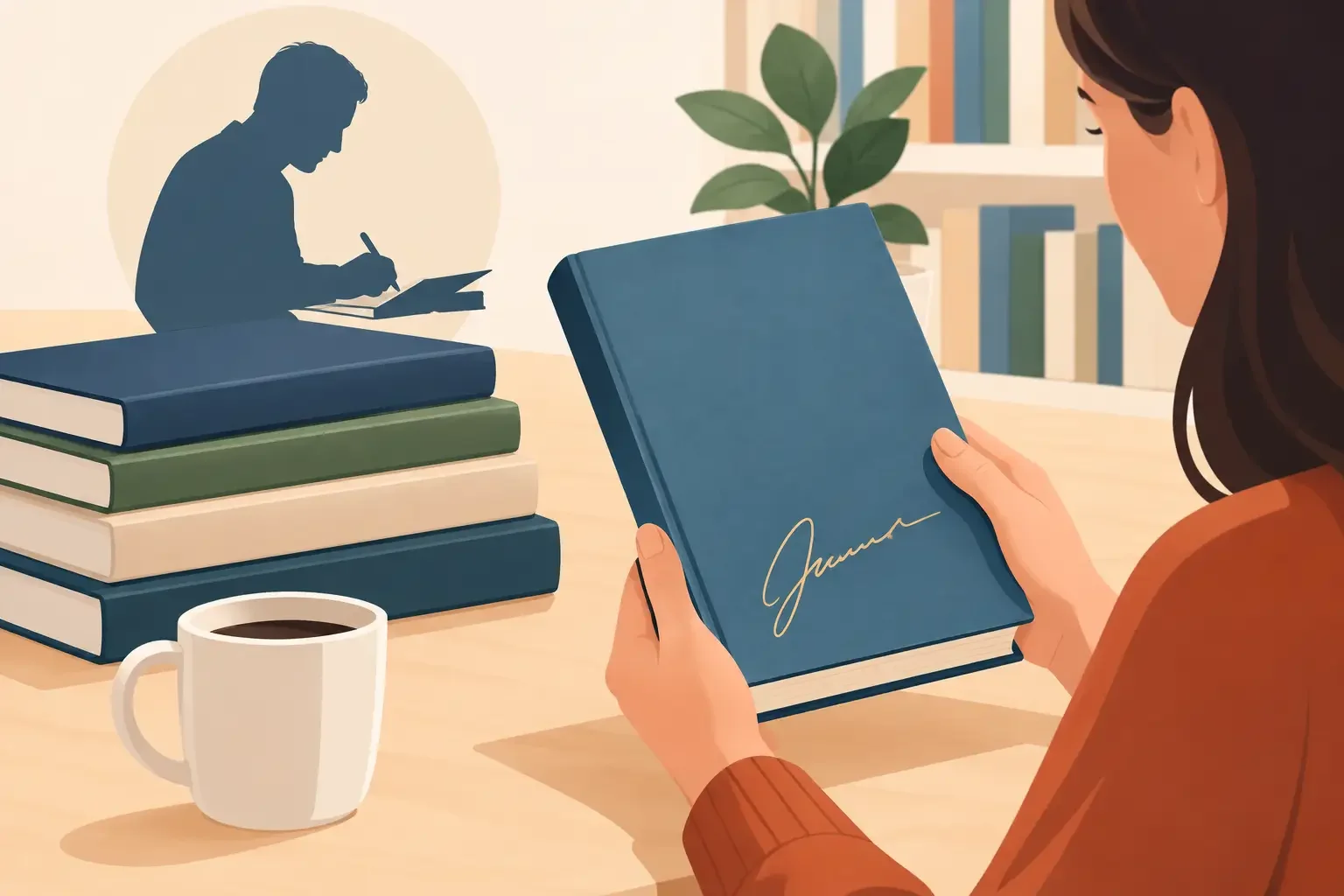
A paperback can be a weapon against a long flight, a bad week, or one more sleepless night. But why do readers buy signed novels when the same story may be available faster on an eReader or for less elsewhere? Because the signed copy is not just a delivery system for the plot. It is proof that this particular book crossed the distance between the person who wrote the chaos and the person who chose to bring it home.
For readers who love a story with a body count, a buried secret, a monster in the dark, or an engine screaming toward disaster, that connection has weight. A signature turns a paperback from a product into a piece of the experience. It says: this one is mine.
Why Readers Buy Signed Novels Instead of Any Copy
The practical answer is simple: readers still want physical books. They want the cover art on a shelf, pages they can flip back through, and a visible record of the worlds that grabbed them by the throat. Digital editions are convenient. They travel light, arrive instantly, and make it easy to start the next thriller at 1:00 a.m. Signed paperbacks offer something different - permanence.
A signature adds a small human mark to an object made for escape. The reader has spent hours in the author’s imagination, chasing clues through a murder scene, surviving a hostile planet, or watching a protagonist make one terrible decision after another. Signing the book closes that loop. It makes the transaction feel less anonymous.
That matters most with fiction that hits hard. Fast-paced genre novels are built to create a reaction: the late-night chapter binge, the angry gasp at a betrayal, the need to know whether anyone gets out alive. Readers often buy signed editions because they want to keep the evidence of that reaction. The book becomes a souvenir from a story that got under their skin.
A Signature Makes the Book Personal
Even a simple autograph changes the emotional temperature of a book. It tells the reader that the copy was handled by the author, not pulled from a warehouse shelf and sent down a conveyor belt. That does not make it more literary, and it does not have to. It makes it more personal.
For an independent author, that personal element is especially powerful. Readers are not dealing with a distant corporate machine. They can follow releases, reply to emails, see the person behind the stories, and buy a signed copy directly from the source. The relationship is still professional, but it feels real.
A personalized inscription can take that feeling further. A reader may buy a signed novel for a spouse who devours paranormal suspense, a friend who lives for serial-killer mysteries, or a parent who misses browsing bookstore shelves. Their name inside the front cover makes the gift feel selected rather than grabbed at the last minute.
Signed Books Carry the Memory of the Read
Readers rarely remember every plot detail years later. They remember the feeling. The locked-room reveal. The chase through the rain. The moment the hero realizes the enemy has been inside the house all along. A signed paperback becomes a physical trigger for that memory.
That is why shelves matter. They are not just storage. They are a map of the reader’s tastes: the detectives they trusted, the spaceships they boarded, the killers they hunted, the disasters they survived from the safety of a couch. A signed copy stands out on that shelf because it carries an extra layer of story outside the pages.
This is also why readers often buy signed editions after finishing an ebook. The ebook was the fast strike. The paperback is the trophy. If the novel delivered the kind of tension, mayhem, and final-page payoff they wanted, owning a signed physical copy feels like a fitting upgrade.
Collecting Is Part of the Fun
Not every signed novel is a rare artifact, and buyers should not treat every autograph as an investment. Most readers are not building a museum collection or betting on future resale value. They are collecting books because collecting is fun.
A signed first run, a special cover, or a title from an author they discovered early can feel like a marker in time. It captures the moment a reader found a new favorite voice before the next release, adaptation, or surge of attention. That sense of being there matters.
For series readers, the pull gets stronger. One signed book looks good. A full row of signed thrillers, sci-fi adventures, or mystery novels tells a bigger story: this is a world they came back to willingly. Each volume marks another case, another enemy, another impossible situation survived.
There is a trade-off, of course. Collectors need shelf space, and signed paperbacks can cost more than digital editions. For readers who care mainly about immediate access, a Kindle copy may be the better move. But when the book is one they expect to revisit, lend, display, or give away, the physical edition earns its place.
The Value Is Emotional, Not Just Financial
The word “valuable” can send people straight to price tags. With signed fiction, the deeper value is usually emotional. A book signed after a reader’s first convention, sent as a birthday gift, or purchased during a difficult season can become impossible to replace, even if another copy costs twenty dollars.
That is the difference between owning the text and owning an object with a history. The words may be identical across every edition. The connection is not.
Buying Direct Feels Like Backing the Storyteller
Readers who buy signed novels directly from an author often like knowing where their money goes. They are supporting the person creating the next dangerous premise, drafting the next twist, and taking the risk on the next genre-bending idea. For indie fiction, that support can have a visible impact.
It also helps build momentum around books that might not have a giant publisher’s marketing machine behind them. A direct purchase tells an author that readers want more of that kind of story: more suspense, more action, more strange worlds, more characters forced into impossible corners.
That does not mean every purchase has to be direct. Amazon, libraries, used bookstores, and ebooks all have their place. Readers should use the format and retailer that fit their budget and reading habits. But a signed edition is a deliberate choice when they want their purchase to feel closer to the source.
For Jay Sauls readers, that can mean getting a signed paperback with free domestic shipping while backing more high-speed, high-stakes fiction. The appeal is not complicated: get the story, get the signature, put it on the shelf, and wait for the next explosion.
Signed Novels Make Better Gifts
A signed book carries more thought than a generic gift card, especially for someone who already has too much stuff. It says the giver knows what kind of stories the recipient loves. Not just “you like to read,” but “you like lethal secrets, desperate escapes, and chapters that refuse to let you sleep.”
The autograph also gives the gift an occasion. A birthday, holiday, graduation, or hard-earned milestone becomes part of the book’s life. Years later, the recipient may not remember every other present from that day, but they may remember opening a novel with their name written inside it.
The best choice depends on the reader. A signed horror-leaning paranormal mystery will not land the same way for someone who prefers quiet historical fiction. The gift works when the story is right first and the signature adds the final hit of personality.
The Real Reason a Signed Copy Wins
Readers buy signed novels because stories are personal even when they are built from explosions, blood trails, conspiracies, and impossible odds. A great book takes over a few hours of someone’s life. A signed copy lets them keep a piece of that takeover after the final page.
So if a novel left you checking the locks, racing through chapters, or staring at the ceiling after the last twist, a signed paperback is more than another purchase. It is a way to give that story a permanent place in your world.