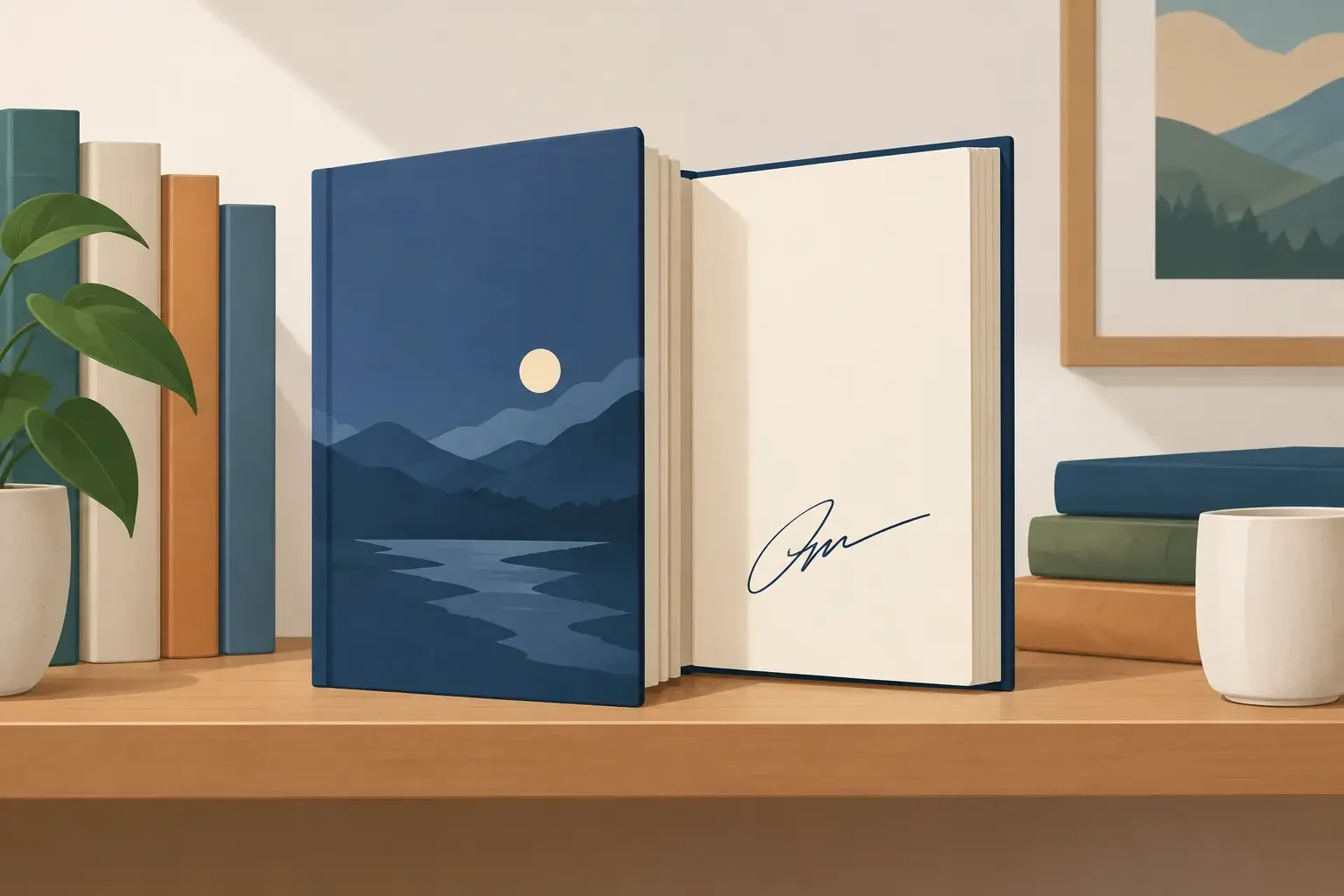
A paperback can deliver a killer story. Signed editions deliver the story with fingerprints on it - a direct line between the person who built the chaos and the reader who chose to bring it home. That matters when the final page lands hard, the secret finally detonates, or the hero makes it out by inches.
For readers who love thrillers, mysteries, sci-fi battles, paranormal danger, and full-throttle action, a signed book is not just another object on a shelf. It is a souvenir from the ride. It says you were there when this story found you.
What Makes Signed Editions Worth Buying?
The signature itself is simple. Ink, paper, a name. The value behind it is more personal.
Most books are built for scale. They move through warehouses, delivery trucks, bookstores, and online orders until one finally reaches your door. That is part of the magic of publishing, but it can also feel anonymous. A signed copy breaks through that distance. Your book was handled by the author before it reached your shelf.
That connection is especially satisfying with commercial fiction. You spend hours following someone through a murder investigation, a wrecked timeline, a haunted secret, a race at impossible speed, or a fight that refuses to stay clean. A signature gives the physical book a final beat after the story ends.
There is also the collector side. First printings, special covers, limited stock, personalized inscriptions, and early copies can make a signed edition more meaningful over time. Not every signed paperback is a rare investment, and it should not be bought as one. The real value is usually emotional: you own a copy that is unmistakably yours.
For many readers, that is enough. You bought the book because the premise sounded dangerous. You kept the signed copy because it became part of your reading history.
Signed Editions Are for Reading, Not Just Display
Some collectors treat signed books like evidence bags. No bent covers. No cracked spines. No sunlight. No one touches the thing without clearance.
That approach makes sense for a truly scarce book or a prized first edition. But there is another way to look at it: a signed paperback still wants to be read. It was made to travel, to sit beside a late-night snack, to get carried on a flight, and to keep you turning pages when you should probably be asleep.
The best choice depends on why you bought it. If you want a clean, display-worthy copy, protect it and pick up a digital edition or standard paperback for the rough work. If the signature is a bonus to a book you are eager to tear through, read it. A faint crease or soft edge is not a crime scene. It is proof that the book did its job.
The sweet spot is simple: enjoy the story while treating the signed page with a little respect. Keep food and drinks clear of the book, do not leave it baking in a hot car, and avoid shoving it loose into a bag with keys and chargers. That is usually all a paperback needs.
A Signature Is Not Always a Personalization
A signed edition generally means the author has signed the book. A personalized copy includes a reader's name or a short message such as “To Morgan, keep running.” The difference is worth knowing before you buy.
Personalized books can feel even more special because they are made for one reader. They can also be less flexible if you are buying a gift and are not sure who will receive it, or if you think you may eventually resell it. A standard signature is the safer collector choice. A personalization is the more intimate one.
Neither option is automatically better. It depends on whether you want a keepsake with your name on it or a signed copy that can move through a collection more easily.
When to Grab a Signed Copy
Signed stock is often limited for a very practical reason: authors have only so many books, so much signing time, and so much room to pack and ship orders. Once a batch is gone, there may be no immediate replacement.
That does not mean every signed edition requires a panic purchase. If you are mildly curious about a book, read the description, sample the opening in your preferred format when available, and see whether the hook has teeth. But if a story already sounds like your kind of mayhem, waiting for a later signing can be a gamble.
New releases are often the strongest time to buy. You get to experience the story close to launch, support the author directly, and lock in a physical copy while inventory is fresh. Signed copies also make sharp gifts for readers who are hard to shop for. A thriller fan may own a dozen ebooks. They are less likely to own a paperback signed specifically for them.
Buying direct can add another layer to the experience. It is a smaller transaction than ordering from a giant marketplace, but it has more personality. You are not just selecting a title from an endless catalog. You are backing the storyteller whose name is on the cover.
How to Tell What You Are Getting
A good signed-edition listing should be clear. Before you place an order, look for whether the book is signed, personalized, numbered, or part of a limited run. Check the format, too. A signed paperback is not the same product as a signed hardcover, and an eBook cannot carry a physical signature unless the author provides a separate signed item.
Pay attention to fulfillment details. Direct orders may take longer than mass-market shipping because someone has to sign, package, and send the book. That is not a flaw. It is part of what makes the order different. Still, it helps to know the expected timing if the copy is meant for a birthday, holiday, or special occasion.
Authenticity is another fair question. Buying from an author's official store or an established bookseller removes most of the guesswork. If you buy secondhand, ask for clear photos of the signature and any edition details. Be cautious with vague claims like “probably signed” or “looks authentic.” A signature should not need a detective team to verify it.
Condition Matters, But Story Matters More
Collectors use condition terms for a reason. A crisp cover, square spine, and clean pages make a book more attractive. If you are paying extra for a collectible copy, inspect photos and descriptions carefully.
But do not let condition language drain the fun out of the purchase. A signed paperback with one tiny shelf rub can still be the copy you reach for when you need a fast escape. The book does not lose its pulse because the corner took a hit in transit.
If pristine condition is the goal, keep the book upright on a shelf, out of direct sun, and away from damp basements or extreme heat. For a signature on the title page, avoid pressing sticky notes, photos, or other items directly against fresh ink. Most signatures dry quickly, but caution is cheap.
Build a Shelf That Tells a Story
A shelf full of signed books can become a map of your reading life. Maybe one marks the first thriller that kept you up until 3 a.m. Another came from an author event. Another was a launch-week order made because the premise involved a dead body, a bad decision, and no clean way out.
There is no rule saying your collection has to be expensive, color-coordinated, or packed with rare editions. A shelf can be built one story at a time. Mix signed copies with battered favorites, new discoveries, and books you plan to loan only to people you trust to bring them back.
If you are giving a signed edition as a gift, think beyond the genre label. Match the book to the reader's appetite for tension. Give the conspiracy chaser a science fiction adventure with a dangerous secret. Give the mystery addict a murder case with buried motives. Give the action fan something loud, fast, and allergic to quiet endings.
A signed book is a small piece of the author-reader bargain: the author brings the danger, the reader brings the imagination, and the story gets a permanent place to land. Pick the copy that makes you want to clear space on the shelf - then open it and let the trouble start.